

Key facts about white piedra
White piedra is a superficial fungal infection of the hair, caused by fungi of the genus Trichosporon. It causes small whitish, yellowish, or light-brown nodules to form around the hair shafts. These nodules do not disappear with regular washing.
In most cases, white piedra does not cause pain, significant itching, or inflammation of the scalp. Severely affected hairs may become coarse, dull, and brittle, making them more likely to break.
It is more common in children, adolescents, and women with long hair. Keeping the hair damp for prolonged periods, tying it up while it is still wet, and excessive sweating may contribute to the development of the infection.
Treatment usually involves antifungal shampoo and, when necessary, cutting or removing the most affected hairs. Oral antifungal medications may be prescribed in some cases. Shaving all the hair is usually not necessary.
What is piedra?
Piedra — the Spanish word for “stone” — is the name given to a type of superficial fungal infection that affects scalp hair or body hair and causes small nodules to form around the hair shafts.
Piedra is divided into two types: white piedra and black piedra.
White piedra is the better-known form and appears as whitish, yellowish, or light-brown nodules attached to hairs on the scalp, underarms, groin, or other areas of the body. It is caused by fungi of the genus Trichosporon.
To the untrained eye, white piedra can look very similar to a nit infestation or severe dandruff. However, these conditions are quite different. We will explain the differences later in this article.
In black piedra, the small nodules are dark, harder, and firmly attached to the hair shafts. It primarily affects scalp hair and is caused by the fungus Piedraia hortae.
What is white piedra?
White piedra is a superficial fungal infection of scalp hair and body hair that can occur in different parts of the world, in both tropical and temperate climates. Cases involving scalp hair are reported mainly in children, adolescents, and young women.
In a review of 131 published cases, 91.6% of patients were female, and most were 18 years old or younger. Long hair, frequent use of headbands and other hair accessories, and leaving the hair wet for prolonged periods were among the factors most commonly associated with the infection.
Several species of Trichosporon have been identified as causes of white piedra, including:
- Trichosporon asahii.
- Trichosporon ovoides.
- Trichosporon inkin.
- Trichosporon mucoides.
- Trichosporon asteroides.
- Trichosporon cutaneum.
There have also been rare reports of Candida parapsilosis being isolated from lesions that resemble white piedra, sometimes together with Trichosporon species and, exceptionally, as the only fungus identified.
How do you get white piedra? Is it contagious?
Exactly how white piedra is acquired is not yet fully understood. Trichosporon species can be found in the environment, including soil, water, and plants, and they may also normally colonize human skin.
There are reports of cases occurring simultaneously in more than one member of the same family, suggesting that person-to-person transmission may occur. However, white piedra is not considered a highly contagious fungal infection, and it is unclear to what extent these family clusters result from direct transmission or from exposure to the same environmental factors.
Once the fungus becomes established on the hair, it grows around the hair shaft and forms small whitish or yellowish nodules attached to it. Despite the name piedra (“stone”), these nodules usually have a relatively soft consistency, unlike the hard nodules seen in black piedra.
What are the symptoms of white piedra?
White piedra is usually asymptomatic. It generally does not cause pain, significant itching, or skin lesions. Severely affected hairs may become fragile, resulting in hair breakage.
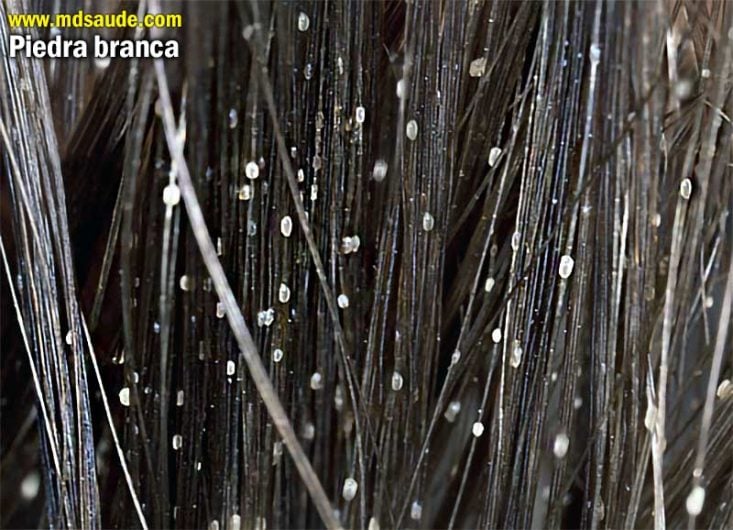
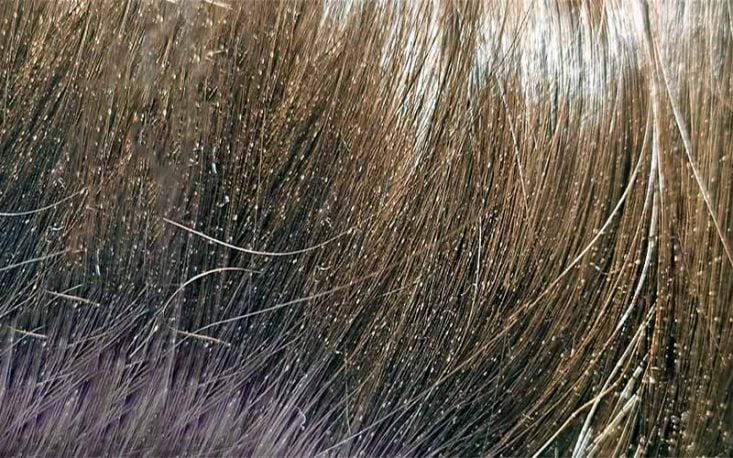
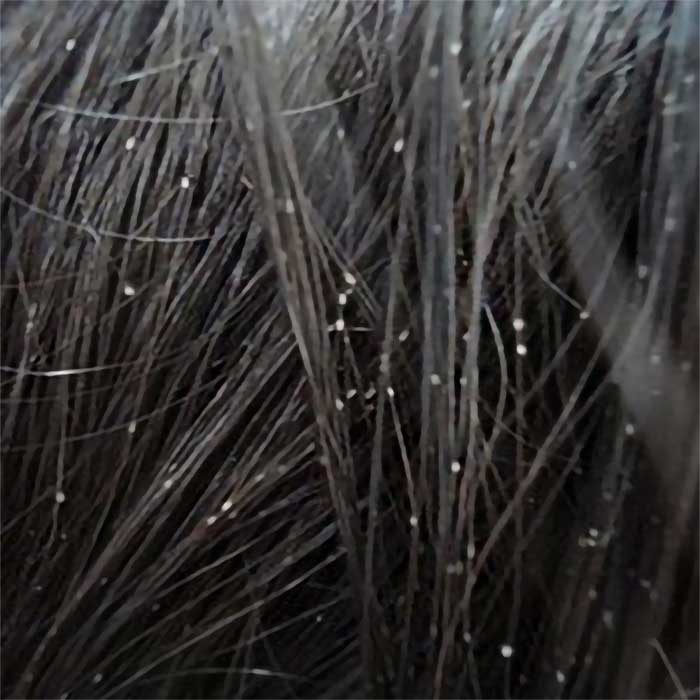
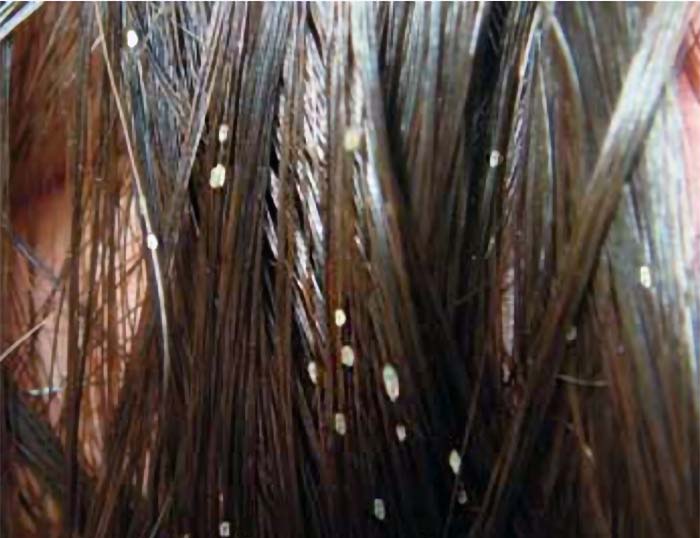
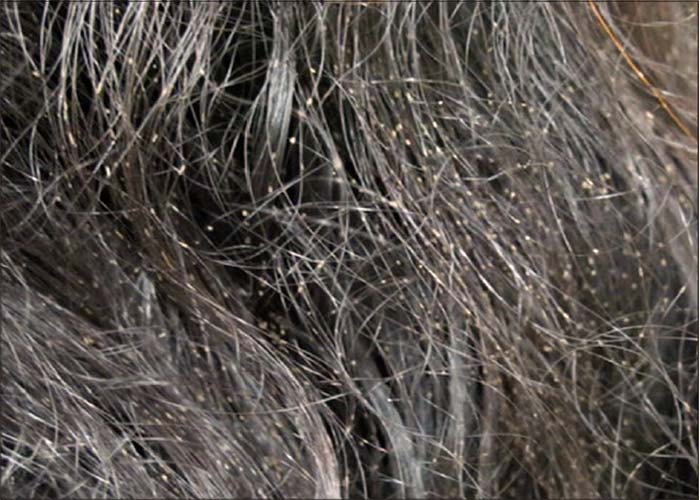
The main clinical manifestation of white piedra is the presence of numerous small, light-colored nodules surrounding the shafts of scalp or body hair.
Any hair-bearing area can be affected, including the scalp, underarms, genital area, beard, eyebrows, eyelashes, and mustache.
The nodules are initially palpable but barely visible. Over time, they grow and become clearly visible and firm, measuring about 1 to 3 mm, with a color ranging from white to brownish. A single hair shaft may have several nodules.
Patients with white piedra often notice small, persistent, palpable, grain-like nodules in their hair. Examination of the hair with the naked eye reveals several small nodules attached to the hair shafts. Newly formed nodules may be softer and may slide along the hair shaft when manipulated. Older nodules are harder and less likely to move.
Pictures of white piedra in the hair
How is white piedra diagnosed?
White piedra is usually diagnosed by a dermatologist through examination of the affected hairs and microscopic evaluation of the nodules, typically after preparation with potassium hydroxide (KOH), which makes it possible to visualize the fungal structures.
If the diagnosis is uncertain, hair samples may be sent for fungal culture, which can confirm the growth of a Trichosporon species and help identify the causative organism.
Differences between white piedra, nits, and dandruff
From a distance, the light-colored nodules of white piedra may resemble nits, which are lice eggs, or severe dandruff. However, when the hair is examined closely, the distinction is usually quite straightforward.
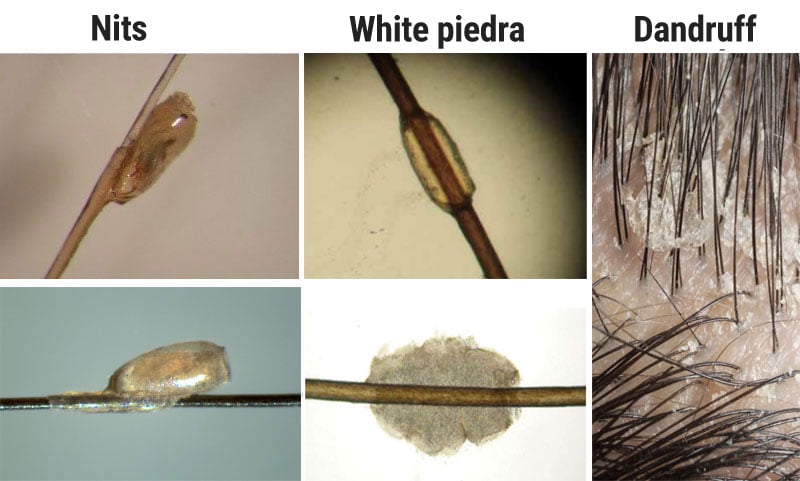
Nits are firmly attached to the side of the hair shaft, usually close to the scalp. Head lice infestation often causes itching, and scratching can result in excoriations and sores. Old or empty nits may remain attached to the hair even after the infestation has been treated.
White piedra consists of fungal growth around the hair shaft, almost like a sheath. This fungal infection is usually asymptomatic, and the nodules can become firmer, particularly as they mature. Recently formed nodules may be more pliable.
Dandruff, on the other hand, consists of small, soft flakes of skin that are easily removed and may be distributed around multiple hairs at the same time. Patients with severe dandruff often have seborrheic dermatitis.
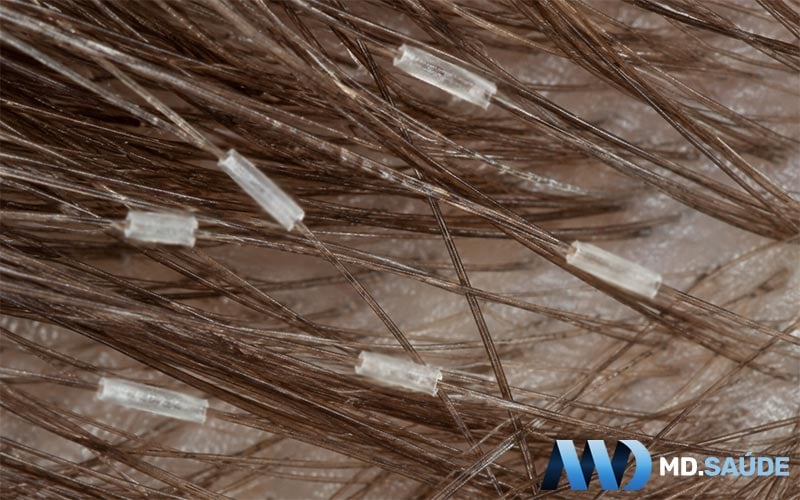
Another condition that can be mistaken for white piedra is hair casts, also known as pseudonits. These are whitish keratin structures that surround the hair shaft like a small tube. Unlike piedra nodules and nits, hair casts usually slide easily along the hair shaft when manipulated.
How is white piedra treated?
Although white piedra is a benign and usually asymptomatic condition, treatment is recommended to eliminate the infection, improve the appearance of the hair, and reduce hair fragility and breakage.
Shaving the hair or cutting it very short is one option for eliminating the fungus, but most patients, particularly women, prefer medical treatment.
Medical treatment usually begins with a topical antifungal. Ketoconazole 2% shampoo is one of the most commonly used options, generally for several weeks.
In more extensive or persistent cases, or when the infection does not respond adequately to topical treatment, an oral antifungal may be added, particularly itraconazole. In studies involving adults, regimens of 100 to 200 mg per day for approximately four to eight weeks have been used.
Combining topical and oral treatment may produce a faster response in some cases, but oral antifungal therapy is not necessary for every patient.
Other topical antifungals, such as clotrimazole, may also be used. In cases requiring systemic treatment, there are reports of the use of terbinafine and other antifungal medications, although there is less clinical experience with these drugs than with itraconazole.
In addition to treatment, prolonged moisture in the hair should be avoided. For example, the hair should not be tied up while it is still wet. Ideally, the hair should always be dried thoroughly after washing.
If the fungal infection recurs, treatment can be repeated, and factors that contribute to prolonged moisture in the hair should also be corrected.
What is black piedra, and how is it different from white piedra?
Black piedra is a rare fungal infection of the hair caused by Piedraia hortae.
Black piedra occurs mainly in hot, humid regions of South America and Southeast Asia. It can affect people of any age, although it is less common after middle age.
The condition is similar to white piedra, but the nodules around the hair shafts are dark, even harder, and more firmly attached. Because they are dark, the nodules may be less noticeable in the hair than those caused by white piedra.
The most effective treatment is to cut or shave the affected hairs. When this is not desired, topical antifungal treatments can be used, such as ketoconazole 2% shampoo or miconazole 2% shampoo, applied once a week for approximately three weeks.
In cases that are resistant to topical treatment, an oral antifungal medication may be used. One reported regimen is terbinafine 250 mg per day for six weeks.
- Piedra – Medscape.
- Piedra – UpToDate.
- White Piedra – Images in Dermatology.
- White Piedra: Clinical, Mycological, and Therapeutic Experience of Fourteen Cases – Skin Appendage Disorders.
- White piedra in children – Journal of the American Academy of Dermatology.
- Black Piedra – StatPearls.




Reader questions about this topic
Questions selected by the editor for their relevance to this article.