

Key facts about scarlet fever
Scarlet fever, also called scarlatina, is an infection caused by the bacterium Streptococcus pyogenes, also known as group A Streptococcus (group A strep). It occurs when the bacteria produce toxins that cause the characteristic rash of the disease.
It is most common in children between 5 and 15 years of age and usually occurs with strep throat (streptococcal pharyngitis or tonsillitis). Adults can also get scarlet fever, although this is less common.
The most characteristic symptoms are fever, sore throat, and a red rash with a rough, sandpaper-like texture. Strawberry tongue, Pastia’s lines, and pallor around the mouth are also typical signs.
Transmission occurs mainly through close contact with respiratory droplets and secretions from infected people.
The diagnosis is suspected based on the clinical presentation and can be confirmed with a test that detects group A strep, such as a rapid antigen test, molecular test, or throat culture.
Treatment involves antibiotics. Penicillin and amoxicillin are the first-line options. Appropriate treatment reduces symptoms, transmission of the bacteria, and the risk of complications.
What is scarlet fever?
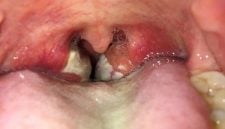
Scarlet fever is an infectious disease characterized by an exanthem, or skin rash (red spots), that can spread over much of the body. It occurs in some people during an infection caused by Streptococcus pyogenes, usually pharyngitis and/or tonsillitis (strep throat).
Scarlet fever occurs most often in school-age children, but it can also affect adolescents and adults.
Scarlet fever was much more feared in the past, when it was associated with epidemics with high mortality rates. With the development of antibiotics and appropriate treatment of streptococcal infections, serious complications have become much less common.
Streptococcus pyogenes, also known as group A beta-hemolytic Streptococcus, is the same bacterium responsible for other common infections, such as:
- Bacterial pharyngitis or tonsillitis.
- Erysipelas.
- Impetigo.
S. pyogenes can also trigger complications after infection, such as:
- Acute post-infectious glomerulonephritis.
- Rheumatic fever.
How does scarlet fever develop?
Scarlet fever occurs when a Streptococcus pyogenes infection is caused by strains capable of producing certain toxins called streptococcal pyrogenic exotoxins. These toxins act as superantigens and trigger an immune response responsible for the typical manifestations of the disease, particularly the red, rough-textured skin rash.
In most cases, scarlet fever occurs in association with an episode of bacterial pharyngitis or tonsillitis. Less commonly, it can also be associated with skin infections caused by S. pyogenes, such as impetigo.
Not every Streptococcus pyogenes infection causes scarlet fever. It is entirely possible for two siblings living in the same household to have different presentations, with one developing scarlet fever and the other having only uncomplicated tonsillitis. This happens because the development of scarlet fever depends both on the bacterial strain’s ability to produce the toxins and on each person’s immune response to them.
In susceptible people, the response to these toxins causes an inflammatory reaction in the skin that typically appears as numerous red spots with a rough, sandpaper-like texture.
Scarlet fever is most common in children between 5 and 15 years of age and is uncommon before age 3. Adults can also develop the disease, although this is less common. Immunity acquired against some streptococcal toxins throughout life probably contributes to the lower frequency with increasing age, but it is entirely possible to have scarlet fever more than once.
Is scarlet fever contagious? How does it spread?
Streptococcus pyogenes is usually transmitted from person to person through contact with respiratory secretions. Possible routes of transmission include coughing, sneezing, and contact with droplets produced while talking. Sharing cups, plates, or eating utensils with an infected person can also spread the bacteria.
Transmission can also occur through hands contaminated with respiratory secretions, particularly when a person touches their nose or mouth after coming into contact with these secretions. For this reason, proper and frequent hand hygiene is an important measure for controlling transmission.
When an S. pyogenes infection occurs in the skin, the bacteria can also be transmitted through direct contact with the lesions or their secretions.
Streptococcus pyogenes is highly contagious. Some infected people can transmit the bacteria even when they have no symptoms. However, after appropriate antibiotic treatment is started, the ability to spread the infection decreases rapidly.
Children with scarlet fever should stay home from school or daycare until they are fever-free and have received at least 12 to 24 hours of antibiotic treatment.
When scarlet fever is not treated with antibiotics, a person may remain contagious for approximately 2 to 3 weeks after symptoms begin.
As previously mentioned, not everyone who comes into contact with group A beta-hemolytic Streptococcus develops scarlet fever. Therefore, although the bacteria are highly contagious, this does not mean that everyone who becomes infected will necessarily develop the disease.
Scarlet fever symptoms
The incubation period for scarlet fever is usually 2 to 5 days but can range from 1 to 7 days. Symptoms usually begin abruptly, with a sore and inflamed throat, body aches, and fever, often above 38°C (100.4°F).
Swollen lymph nodes in the neck, headache, abdominal pain, nausea, and vomiting may also occur. Approximately 12 to 48 hours after symptoms begin, the most characteristic sign of the disease usually appears: the skin rash.
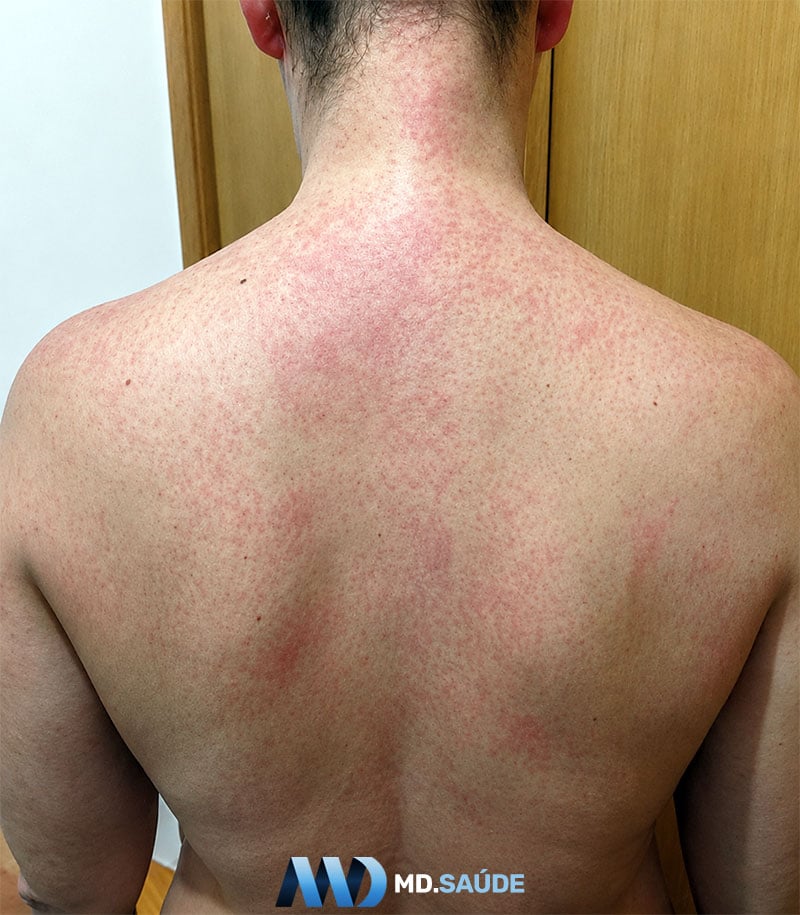
There are four typical signs of scarlet fever:
- Skin rash.
- Pastia’s lines (red lines in skin folds).
- Strawberry tongue.
- Flushed face with pallor around the mouth.
Scarlet fever rash
The scarlet fever rash usually first appears on the trunk, particularly the chest and abdomen, and then spreads to other areas of the body. The armpits, groin, and other skin folds may have particularly noticeable lesions. The palms of the hands and soles of the feet are usually spared during the initial phase of the rash.
The skin changes in scarlet fever are characterized by numerous very small, red, slightly raised lesions that can give the skin a rough texture similar to sandpaper.
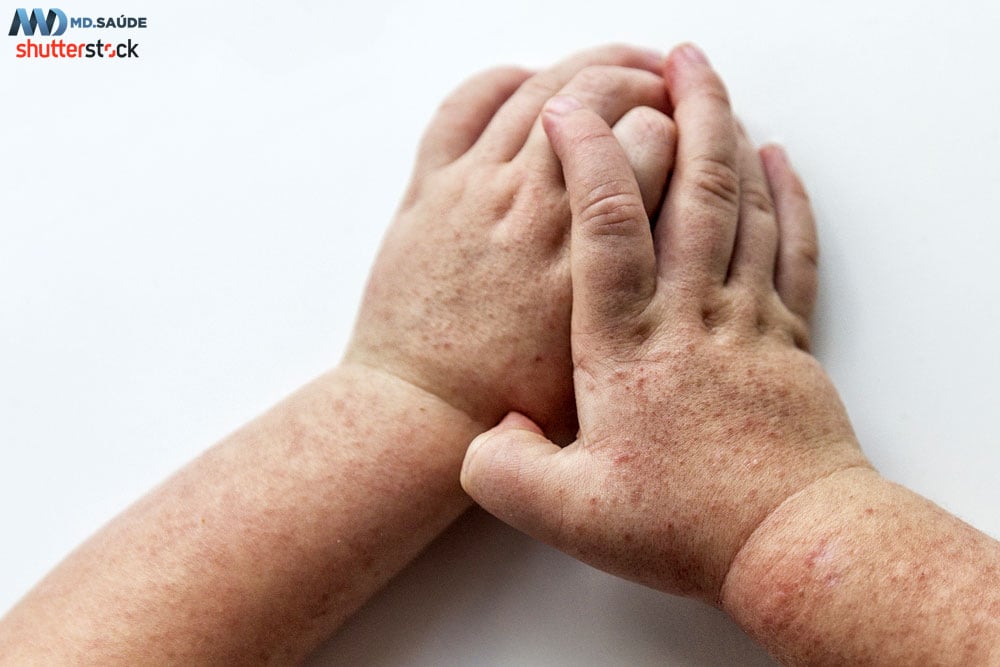
In addition to being red, scarlet fever lesions usually blanch temporarily when pressure is applied to the skin with a finger. Some patients experience itching, although this does not occur in every case.
In people with darker skin, the redness may be less noticeable. In these cases, the slightly raised lesions and rough, sandpaper-like texture may be easier to identify.
The rash usually disappears within approximately one week. As the spots fade, the skin may begin to peel, particularly on the fingers and toes, palms, and soles. This peeling can persist for several weeks.
Pastia’s lines
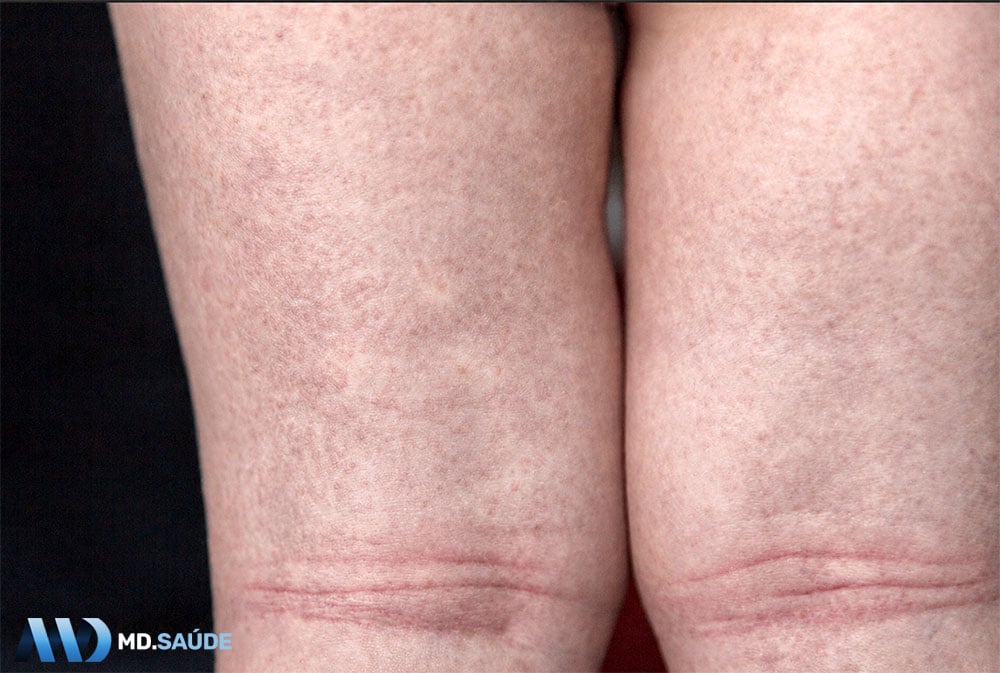
The rash tends to become more concentrated in skin folds, such as the armpits, groin, behind the knees, neck, and elbow creases, forming intensely red lines in these areas. These are known as Pastia’s lines or Pastia’s sign.
Strawberry tongue
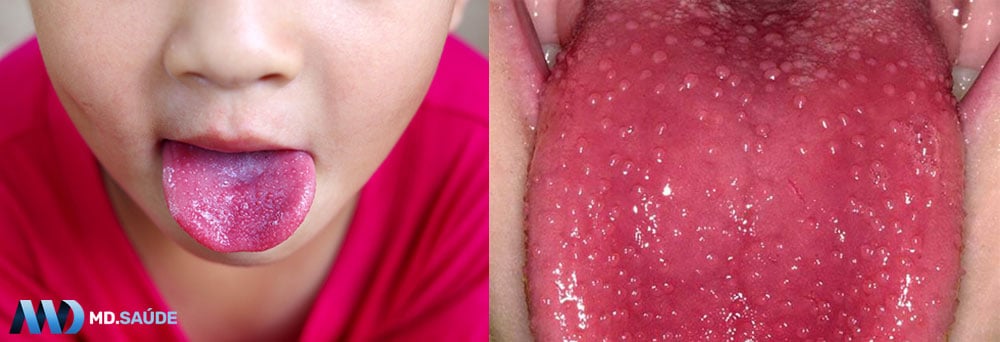
Another characteristic finding is strawberry tongue, sometimes also called raspberry tongue. The name comes from the tongue becoming red with very prominent papillae, giving it an appearance similar to these fruits.
Early in the illness, the tongue may have a whitish coating through which the red papillae protrude. After a few days, this coating usually disappears, leaving the tongue intensely red with prominent papillae. Strawberry tongue may appear either before or after the skin rash develops.
Pallor around the mouth
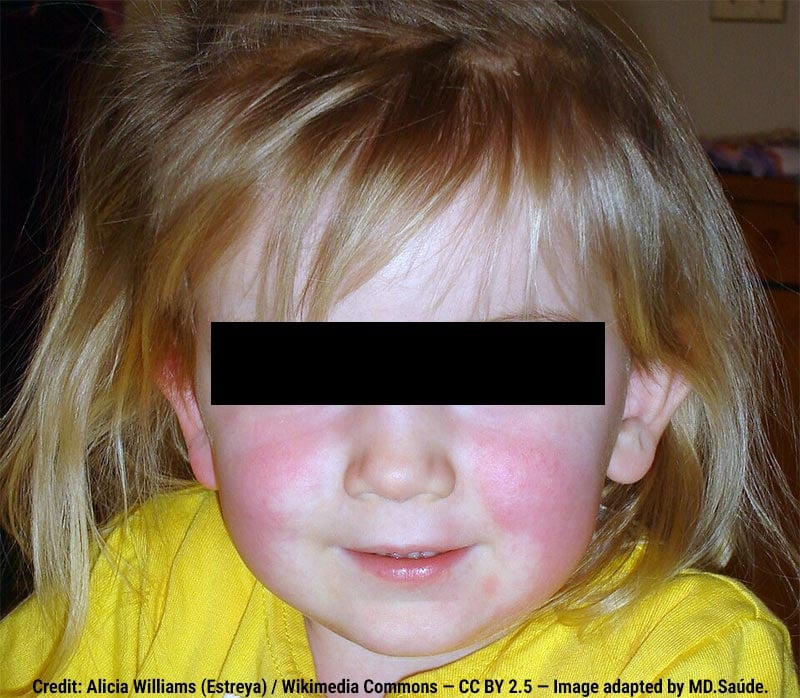
The face may become noticeably flushed while the area around the lips remains relatively pale. This contrast, known as Filatov’s sign or circumoral pallor, is another characteristic manifestation of scarlet fever.
Diagnosis
Scarlet fever is initially suspected based on the medical history and physical examination, as the combination of sore throat, fever, and a characteristic sandpaper-like rash is highly suggestive of the disease.
However, other infections, particularly viral infections, can also cause a sore throat accompanied by a skin rash. For this reason, when scarlet fever associated with pharyngitis is suspected, identifying Streptococcus pyogenes helps confirm the diagnosis.
Testing for the bacteria is performed using a sample collected from the oropharynx. The main available methods are a rapid antigen detection test, molecular tests such as PCR or NAAT, and throat culture.
In children aged 3 years and older and adolescents, a negative rapid antigen test should be confirmed with a throat culture because rapid antigen tests are less sensitive. In adults, confirmation after a negative rapid test is generally not necessary.
Is scarlet fever serious? What are the complications?
Until the early 20th century, scarlet fever was considered a serious infection because effective treatment was not available and complications were very common. During some epidemics, mortality rates reached approximately 20%.
With the introduction of antibiotics, however, complication rates fell dramatically, and scarlet fever became a disease with an excellent prognosis. Today, serious complications and deaths are uncommon, particularly when the infection is recognized and treated appropriately.
When left untreated, scarlet fever can be complicated by a throat abscess, ear infection, sinusitis, cervical lymphadenitis, pneumonia, or, less commonly, invasive Streptococcus pyogenes infection.
Rheumatic fever and poststreptococcal glomerulonephritis are now uncommon complications, although they occurred relatively frequently in the past. They are not caused by direct invasion of the heart or kidneys by the bacteria but by an immune system reaction triggered by the streptococcal infection.
Appropriate antibiotic treatment reduces the risk of suppurative complications and rheumatic fever. However, it has not been shown to reliably prevent poststreptococcal glomerulonephritis.
Viral infections such as influenza and chickenpox can increase the risk of more severe invasive infections caused by group A strep. For this reason, a child with scarlet fever associated with one of these infections requires particular attention if their overall condition worsens.
Scarlet fever treatment
Scarlet fever is treated with antibiotics to eliminate group A beta-hemolytic Streptococcus and, consequently, stop the production of the toxins responsible for the skin reaction.
In addition to speeding symptom improvement, antibiotic treatment is important for reducing the risk of transmitting the bacteria to other people and lowering the risk of certain complications, particularly suppurative complications and rheumatic fever.
The antibiotics of choice for scarlet fever are penicillin V or amoxicillin. The recommended duration of treatment is 10 days.
An option with a simpler dosing schedule is benzathine penicillin G, which is administered as a single intramuscular injection.
In patients with a penicillin allergy, the choice of antibiotic depends on the type of allergic reaction. Cephalexin or cefadroxil may be used in patients without a history of an immediate allergic reaction to penicillin. Clindamycin, azithromycin, and clarithromycin are other alternatives. Erythromycin may also be used in some situations.
Unlike penicillin, to which Streptococcus pyogenes remains susceptible, resistance to macrolides and clindamycin varies by region and over time. Therefore, the choice of an alternative antibiotic should take into account the type of allergy and, when available, local patterns of bacterial resistance.
In addition to antibiotics, treatment includes measures to relieve symptoms, such as adequate hydration and the use of pain relievers or fever-reducing medications when needed. The rash usually does not require specific treatment and disappears as the illness resolves.
When should you seek medical care?
Suspected scarlet fever should be evaluated by a healthcare professional, particularly when fever, sore throat, and a rough, sandpaper-like rash occur together.
Anyone who has already started antibiotics should be reevaluated if there is no improvement after approximately 48 hours of treatment.
Prompt medical attention is also important if there is a significant worsening of the person’s general condition, difficulty breathing or swallowing, signs of dehydration, excessive drowsiness, persistent fever, or a return of symptoms after initial improvement.
Some complications of streptococcal infection can develop days or weeks after scarlet fever has resolved. Therefore, the later appearance of new symptoms such as swelling, dark urine, joint pain or swelling, fever, or shortness of breath also warrants medical evaluation.
Scarlet fever questions and answers (FAQ)
Can scarlet fever cause lasting skin changes after recovery?
In most cases, the skin returns to normal after the rash and peeling resolve, without permanent scarring. Peeling may continue for several weeks after the red spots disappear.
Temporary changes in skin pigmentation can occur after inflammatory skin conditions, particularly in people with darker skin, but they are not a typical or permanent consequence of scarlet fever.
Can you get scarlet fever more than once?
Yes. Having scarlet fever once does not guarantee complete immunity against future episodes. Different strains of Streptococcus pyogenes and different toxins are involved in the disease, so a person can develop scarlet fever more than once during their lifetime.
Is there a vaccine for scarlet fever?
No. There is currently no approved vaccine against scarlet fever or Streptococcus pyogenes. Prevention is mainly based on appropriate diagnosis and treatment of streptococcal infections and hygiene measures to reduce transmission.
Can scarlet fever occur without a fever?
Yes, although fever is a very common manifestation. Mild or atypical cases may cause only a low-grade fever or even no fever at all. Therefore, the absence of fever does not completely rule out scarlet fever when other suggestive signs are present.
Can pets spread or catch scarlet fever?
Scarlet fever is essentially a human disease. Humans are the natural host of Streptococcus pyogenes, and dogs, cats, and other household pets are not considered important reservoirs of the bacteria or usual sources of scarlet fever transmission.
There are rare reports of S. pyogenes being isolated from animals, so it is not correct to say that animals can never be colonized or infected. In practice, however, scarlet fever transmission occurs between humans.
What precautions should family members of someone with scarlet fever take?
Family members should practice careful hand hygiene, avoid sharing cups, eating utensils, towels, clothing, and bedding, and watch for the development of symptoms. If anyone develops a sore throat, fever, or rash, they should seek medical evaluation for diagnosis and treatment if necessary.
People who remain asymptomatic generally do not need preventive antibiotics or testing solely because they have been in contact with someone who has scarlet fever.
Can adults get scarlet fever?
Yes. Scarlet fever is much more common in children between 5 and 15 years old, but adolescents and adults can also develop the disease. In adults, as in children, scarlet fever usually occurs in association with a streptococcal throat infection.
Can you have scarlet fever without a sore throat?
Yes, although this is less common. Most cases are associated with pharyngitis or tonsillitis caused by Streptococcus pyogenes, but scarlet fever can also occur when the streptococcal infection is located in the skin or in a wound.
How long does scarlet fever last?
In most cases, scarlet fever lasts about one week. With appropriate treatment, the fever and sore throat usually improve earlier, while the rash may take approximately 7 days to disappear.
After the spots disappear, the skin may peel, particularly on the hands and feet. This peeling can continue for several weeks and does not mean that the infection is still active.
Can scarlet fever be mild?
Yes. Not every case of scarlet fever causes a high fever or a very pronounced rash. Some people have milder symptoms, with only a few spots and little effect on their overall condition. Even so, other infectious or inflammatory conditions can produce similar symptoms, so the severity of the rash alone cannot confirm or rule out the diagnosis.
- Centers for Disease Control and Prevention (CDC). Clinical Guidance for Scarlet Fever. Updated February 20, 2026.
- Sabir S, Nguyen AD. Scarlet Fever. StatPearls. Treasure Island (FL): StatPearls Publishing. Updated January 31, 2026.
- Infectious Diseases Society of America (IDSA). 2025 Clinical Practice Guideline Update on Group A Streptococcal Pharyngitis: Risk Assessment Using Clinical Scoring Systems in Children and Adults. Updated October 14, 2025.
- UK Health Security Agency (UKHSA). Scarlet fever: symptoms, diagnosis and treatment. GOV.UK.
- Hurst JR, Brouwer S, Walker MJ, McCormick JK. Streptococcal superantigens and the return of scarlet fever. PLoS Pathog. 2021;17:e1010097.
- Brouwer S, Rivera-Hernandez T, Curren BF, et al. Pathogenesis, epidemiology and control of Group A Streptococcus infection. Nat Rev Microbiol. 2023;21(7):431-447. doi:10.1038/s41579-023-00865-7.
- Proft T, Fraser JD. Streptococcus pyogenes Superantigens: Biological properties and potential role in disease. In: Ferretti JJ, Stevens DL, Fischetti VA, editors. Streptococcus pyogenes: Basic Biology to Clinical Manifestations. 2nd ed. University of Oklahoma Health Sciences Center; 2022.
- Shulman ST. The History of Pediatric Infectious Diseases. Pediatric Research. 2004;55:163–176. doi:10.1203/01.PDR.0000101756.93542.09.







Reader questions about this topic
Questions selected by the editor for their relevance to this article.