

Key information about terbinafine
Terbinafine is an antifungal medication used mainly to treat fungal infections caused by dermatophytes, such as nail fungus (onychomycosis), athlete’s foot, jock itch, and ringworm.
For adults, the usual oral dose of terbinafine is 250 mg once daily, but the duration of treatment varies considerably depending on where the infection is located.
For nail fungus, oral treatment usually lasts 6 weeks for fingernails and 12 weeks for toenails. The nail may take several months to fully return to its normal appearance, even after the fungus has already been eliminated.
Terbinafine cream, gel, or spray is useful for several fungal skin infections, but these formulations are not appropriate treatments for nail fungus or scalp ringworm.
Oral terbinafine is not effective against tinea versicolor (pityriasis versicolor), although topical formulations can be used to treat this infection.
Before starting oral terbinafine, liver function should be assessed with blood tests. Serious liver injury is rare, but it can occur.
Oral terbinafine can interact with other medications, particularly certain antidepressants, beta-blockers, antiarrhythmics, rifampin (rifampicin), fluconazole, and tamoxifen.
What is terbinafine hydrochloride?
Terbinafine hydrochloride is an antifungal medication that is particularly effective against dermatophytes, a group of fungi responsible for most fungal infections of the skin and nails. For dermatophyte onychomycosis, oral terbinafine is one of the most effective options and is often considered first-line treatment.
Although it is commonly prescribed for onychomycosis, terbinafine is also effective against other fungal skin infections.
This antifungal is available as tablets, cream, gel, or spray. The indications are not exactly the same for every formulation: some infections respond well to topical treatment, while others require oral terbinafine.
Terbinafine works by interfering with the production of ergosterol, an important component of the fungal cell membrane. It does this by inhibiting an enzyme called squalene epoxidase, causing squalene to accumulate inside the fungal cell and ultimately leading to its death.
What is terbinafine used for?
As mentioned at the beginning of this article, one of the main indications for oral terbinafine is nail fungus (onychomycosis), particularly when it is caused by dermatophytes.
Because not every yellow, thickened, or deformed nail is caused by a fungal infection, it is best to confirm the diagnosis of onychomycosis before starting a prolonged course of oral antifungal treatment. Psoriasis, repeated trauma, and other nail disorders can produce similar changes. Official prescribing information for oral terbinafine recommends mycological confirmation before treating onychomycosis.
Terbinafine can also be used for other fungal infections, including:
- Tinea capitis (scalp ringworm).
- Tinea corporis (ringworm of the body caused by dermatophytes).
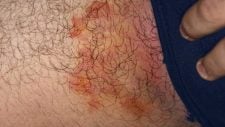
- Tinea cruris (jock itch).
- Tinea pedis (athlete’s foot).
- Tinea versicolor (pityriasis versicolor), only with topical formulations.
- Sporotrichosis, in selected situations.
- Candida intertrigo (candidiasis of the skin folds), with topical terbinafine.
It is important to understand that terbinafine tablets and cream are not interchangeable. In tinea capitis and onychomycosis, for example, topical cream cannot adequately reach the site where the fungus is located. With tinea versicolor, the opposite is true: topical terbinafine can be effective, whereas oral terbinafine is not.
How should terbinafine be taken or used?
The dosage of terbinafine varies according to the type of fungal infection being treated.
In adults, the usual oral dose is 250 mg once daily. The tablet can be taken with or without food. Taking it at approximately the same time every day can make it easier to follow the treatment correctly.
If a dose is missed, it can be taken when the patient remembers, unless it is already close to the time of the next dose. In that case, the missed dose should be skipped. Do not take a double dose to make up for a missed tablet.
For topical treatment, the skin should be clean and dry. The cream should be applied in a thin layer over the affected area and the surrounding skin, then gently rubbed in. The frequency and duration may vary depending on the specific product.
The regimens below are commonly used, but the dose and duration of treatment may be adjusted by a healthcare professional depending on the extent of the infection, the fungus involved, the patient’s age, underlying medical conditions, and response to treatment.
Onychomycosis – nail fungus
Oral treatment:
- Fingernails: one 250 mg tablet once daily for 6 weeks.
- Toenails: one 250 mg tablet once daily for 12 weeks.
Terbinafine cream, gel, and spray are not suitable for treating onychomycosis because they do not penetrate the nail sufficiently to reach the fungus at the concentrations required. There are antifungal medications specifically formulated as nail lacquers, solutions, or other nail preparations, but these are not equivalent to regular terbinafine skin cream.
Another important point is that the nail does not return to normal as soon as treatment ends. The antifungal may already have eliminated the fungus, but the damaged portion of the nail still has to grow out and be replaced by healthy nail. For this reason, the final cosmetic result may not become apparent until several months after the tablets have been stopped.
Tinea capitis – scalp ringworm
Tinea capitis needs to be treated with an oral antifungal. Creams and other topical antifungals used alone cannot adequately eliminate the fungus from the hair shafts and hair follicles.
The condition occurs mainly in children but can also affect adults. Terbinafine is one treatment option, particularly for infections caused by Trichophyton species.
Commonly used regimens include:
- Adults: 250 mg once daily.
- Children weighing 10 to 19 kg: 62.5 mg once daily.
- Children weighing 20 to 39 kg: 125 mg once daily.
- Children weighing 40 kg or more: 250 mg once daily.
The usual duration of treatment is approximately 4 weeks, but it may vary according to the causative fungus and the clinical response. Infections caused by Microsporum species, for example, may respond less well to terbinafine than those caused by Trichophyton, so another antifungal or a longer course of treatment may be required.
Recommendations for oral terbinafine use in children vary by country and product. In some countries, weight-based dosing is used for certain fungal infections, while other product labels do not recommend its use in children because clinical experience is limited. For this reason, oral terbinafine in children should be used only under medical supervision and according to local recommendations.
Tinea corporis – ringworm
Oral treatment: one 250 mg tablet once daily, usually for 2 to 4 weeks. Oral treatment is generally reserved for infections that are more extensive, severe, recurrent, or do not respond adequately to topical therapy.
Topical treatment: apply the cream to the affected areas once or twice daily for 1 to 2 weeks, depending on the formulation used.
Tinea cruris – jock itch
Oral treatment: one 250 mg tablet once daily for 2 to 4 weeks, generally for extensive, recurrent, or treatment-resistant infections.
Topical treatment: apply the cream once or twice daily for 1 to 2 weeks, depending on the formulation.
Tinea pedis – athlete’s foot
For athlete’s foot, commonly used regimens include:
Oral treatment: one 250 mg tablet once daily for 2 to 6 weeks. Oral treatment is generally reserved for extensive, recurrent, or resistant infections.
Topical treatment: the cream is usually applied once or twice daily, generally for about 1 week, although some formulations recommend a slightly longer course.
Tinea versicolor – pityriasis versicolor
Topical treatment: terbinafine cream can be applied to the affected areas once or twice daily, usually for around 2 weeks, depending on the formulation.
Unlike dermatophyte infections, tinea versicolor does not respond to oral terbinafine. Therefore, replacing the cream with tablets in the expectation of getting a “stronger” treatment does not make sense.
Sporotrichosis
Oral terbinafine is one of the alternative treatments that can be used for certain forms of sporotrichosis, particularly cutaneous and lymphocutaneous disease.
Itraconazole is usually the first-line treatment. When itraconazole cannot be used, is not well tolerated, or does not produce an adequate response, terbinafine may be considered as an alternative.
According to international recommendations, one regimen used in adults is:
Oral treatment: terbinafine 500 mg twice daily.
Treatment usually continues for several months and for 2 to 4 weeks after the lesions have resolved. The dose and duration should be determined and monitored by a physician because different regimens have been used in studies, and recommendations may vary according to the clinical form of the disease and individual patient factors.
Disseminated, extracutaneous, or central nervous system sporotrichosis requires a different treatment approach and should not be treated with oral terbinafine alone.
Terbinafine cream is not an appropriate treatment for sporotrichosis.
Candida intertrigo
For candidiasis affecting skin folds, topical terbinafine is one possible treatment option.
Topical treatment: apply the cream once or twice daily, usually for 1 to 2 weeks, depending on the formulation used.
Oral terbinafine is not considered an appropriate treatment for cutaneous candidiasis. Its activity against Candida is less predictable than its activity against dermatophytes, and when systemic treatment is required, other antifungal medications are generally preferred.
How long does terbinafine take to work?
For fungal skin infections treated with topical terbinafine, itching, redness, and scaling usually begin to improve within the first few days. However, this does not mean that the fungus has already been completely eliminated. Stopping treatment before the recommended course is complete increases the risk that the infection will return.
The opposite can also occur: the treatment may already have eliminated the fungus, but the skin still needs some time to return completely to normal.
With onychomycosis, this difference is even more noticeable. Even after 6 or 12 weeks of tablets, the abnormal nail does not disappear immediately. A new nail must grow from the base, which is why the appearance of the nail can continue to improve for several months after treatment has ended.
If a fungal skin infection shows no improvement after topical treatment has been used correctly, the diagnosis should be reconsidered. Not every itchy or scaly skin lesion is fungal. In addition, terbinafine-resistant dermatophytes are now being identified, including some strains of Trichophyton indotineae and Trichophyton rubrum. These resistant infections have been reported in different parts of the world.
Terbinafine side effects
Topical terbinafine
Side effects from terbinafine cream are generally limited to the area where the medication is applied.
Skin irritation, including redness, burning, or itching, is one of the most common adverse effects. Scaling, dryness, pain at the application site, or contact dermatitis may also occur.
Topical terbinafine should be kept away from the eyes. If an allergic reaction occurs, the product should be removed from the skin and treatment discontinued.
Oral terbinafine
Oral terbinafine is generally well tolerated, and most side effects are mild and temporary.
In clinical trials used for the original prescribing information, the most commonly reported side effects included:
- Headache, in approximately 10% of patients.
- Diarrhea, in around 6%.
- Skin reactions, such as rash and itching, in approximately 6%.
- Heartburn, stomach discomfort, or abdominal pain, in around 4%.
- Taste disturbances, in approximately 3%.
- Loss of appetite.
- Nausea.
These percentages are only approximate figures from clinical trials and do not mean that the frequency will be exactly the same in every population.
Other possible adverse effects include visual disturbances, changes or loss of smell, depression, unintended weight loss, muscle or joint pain, and abnormal liver blood tests.
A characteristic side effect of oral terbinafine is altered taste. Some patients notice that food tastes different or experience a partial or complete loss of taste. In most cases, this resolves after the medication is stopped, but rare cases may persist for a prolonged period. Changes in the sense of smell can also occur.
Serious reactions such as Stevens-Johnson syndrome, toxic epidermal necrolysis, significant abnormalities in blood cell counts, and severe liver injury are rare but require the medication to be stopped and medical evaluation.
Can terbinafine damage the liver?
Oral terbinafine can cause liver injury. This is rare but can be serious, and cases of liver failure requiring transplantation have been reported. Liver toxicity can occur even in people who had no known liver disease before starting treatment.
For this reason, liver function tests, particularly ALT and AST, are recommended before oral terbinafine is started. During longer courses of treatment, liver function may be reassessed; some prescribing information recommends repeat testing at around 4 to 6 weeks.
Patients should contact their healthcare provider and stop oral terbinafine if they develop symptoms suggestive of liver injury, such as persistent unexplained nausea, significant loss of appetite, marked fatigue, vomiting, pain in the upper right side of the abdomen, yellowing of the skin or eyes, very dark urine, or unusually pale stools.
Precautions and contraindications
Cream
Because less than 5% of terbinafine applied to the skin is absorbed into the bloodstream, systemic exposure is very low. The main contraindication is a history of an allergic reaction to terbinafine or any other ingredient in the product.
The medication is for external use only and should be kept away from the eyes, mouth, and other mucous membranes.
In children, minimum-age recommendations vary according to the formulation and country. Some 1% cream products are not recommended for children younger than 12 years because of insufficient data. The instructions for the specific product being used should therefore be followed.
Tablets
Oral terbinafine should generally not be used in people with chronic or active liver disease.
Patients with systemic or cutaneous lupus erythematosus may experience a flare after starting treatment. Worsening of psoriasis has also been reported. A healthcare professional should be informed if signs of an exacerbation develop.
Can people with kidney disease take terbinafine?
Oral terbinafine requires caution in patients with chronic kidney disease. When creatinine clearance is 50 mL/min or lower, terbinafine clearance is reduced by approximately 50%.
Because its use has not been adequately studied in this population, product information generally does not recommend oral terbinafine in this setting and does not establish a standardized reduced dose.
Pregnancy
Because data on oral terbinafine use during pregnancy remain limited, treatment is generally postponed when possible.
This is particularly relevant for onychomycosis, which is usually not urgent and can often be treated after pregnancy.
Pregnancy, however, should not be regarded as an absolute contraindication in every situation. If an infection requires treatment, a healthcare professional may consider oral terbinafine when the expected benefit to the mother outweighs the potential risks to the fetus.
Topical terbinafine results in much lower systemic exposure, but its use during pregnancy should also be guided by a healthcare professional when treatment is genuinely needed.
Breastfeeding
Oral terbinafine passes into breast milk. For this reason, many product labels recommend avoiding oral treatment while breastfeeding.
The situation is different with topical terbinafine. According to LactMed, the U.S. National Library of Medicine database on medications and breastfeeding, topical terbinafine is expected to pose a low risk to the infant because only a small amount is absorbed through the skin.
Recommendations can vary, however, depending on the product and country. Some product information takes a more conservative approach and advises avoiding terbinafine during breastfeeding. If topical terbinafine is used, it should not be applied to the nipple or breast, and the infant should not come into direct contact with the treated area.
Can you drink alcohol while taking terbinafine?
There is no known direct interaction between terbinafine and alcohol that requires everyone taking the medication to avoid alcohol completely. According to the UK National Health Service (NHS), alcohol does not have to be completely avoided while taking terbinafine.
However, because oral terbinafine can rarely cause liver injury, excessive alcohol consumption should be avoided, particularly in people with liver disease, abnormal liver enzymes, or other risk factors for liver toxicity.
Drug interactions
Oral terbinafine can interfere with the metabolism of several medications.
One of the most important mechanisms is inhibition of the CYP2D6 enzyme, which is involved in metabolizing many drugs. Patients who take regular medications should therefore tell their healthcare provider about everything they use before starting oral terbinafine.
The main interactions include:
- Medications that can increase terbinafine blood levels and therefore increase exposure to the antifungal: cimetidine, fluconazole, ketoconazole, and amiodarone.
- Medications that can reduce terbinafine blood levels and potentially decrease its effectiveness: rifampin (rifampicin).
- Medications whose levels or effects may increase because of terbinafine, mainly through CYP2D6 inhibition: tricyclic antidepressants such as amitriptyline, imipramine, and nortriptyline; some selective serotonin reuptake inhibitors (SSRIs); beta-blockers such as metoprolol; and some antiarrhythmics such as propafenone.
- Medications whose effects may decrease: codeine, tramadol, and tamoxifen depend to varying degrees on CYP2D6 to form active metabolites. Inhibition of this enzyme by terbinafine may therefore reduce the expected effects of these medications. Terbinafine can also increase the elimination of cyclosporine, reducing its blood concentration.
Terbinafine may also slightly reduce caffeine clearance. In some people, high intake of coffee, tea, cola drinks, or energy drinks may, therefore, cause more insomnia, restlessness, or headache during treatment.
Changes in INR and prothrombin time have been reported in patients taking terbinafine together with warfarin. Anyone receiving anticoagulant treatment should inform their healthcare provider before starting the antifungal.
Brand names
Terbinafine hydrochloride is widely available as a generic medication and under different brand names.
Lamisil is one of the best-known brands of terbinafine and is available in many countries. However, brand names, formulations, and availability vary between markets, including the United States, the United Kingdom, India, and other countries, and may change over time.
For this reason, when looking for an equivalent product, the most important thing is to check that the active ingredient is terbinafine or terbinafine hydrochloride and to confirm the strength and dosage form.
- DailyMed — Terbinafine hydrochloride tablets, prescribing information.
- Electronic Medicines Compendium — Terbinafine 250 mg tablets, Summary of Product Characteristics.
- Electronic Medicines Compendium — Terbinafine 1% cream, Summary of Product Characteristics.
- NHS — Terbinafine.
- Global guideline for the diagnosis and management of the endemic mycoses — ECMM/ISHAM.
- NICE Clinical Knowledge Summaries — fungal skin infections.
- British Association of Dermatologists — Tinea capitis.
- National Library of Medicine — LiverTox: Terbinafine.
- National Library of Medicine — LactMed: Terbinafine.
- CDC — Emerging Ringworm: antifungal-resistant dermatophytes.





Reader questions about this topic
Questions selected by the editor for their relevance to this article.