

Key facts about baby vision
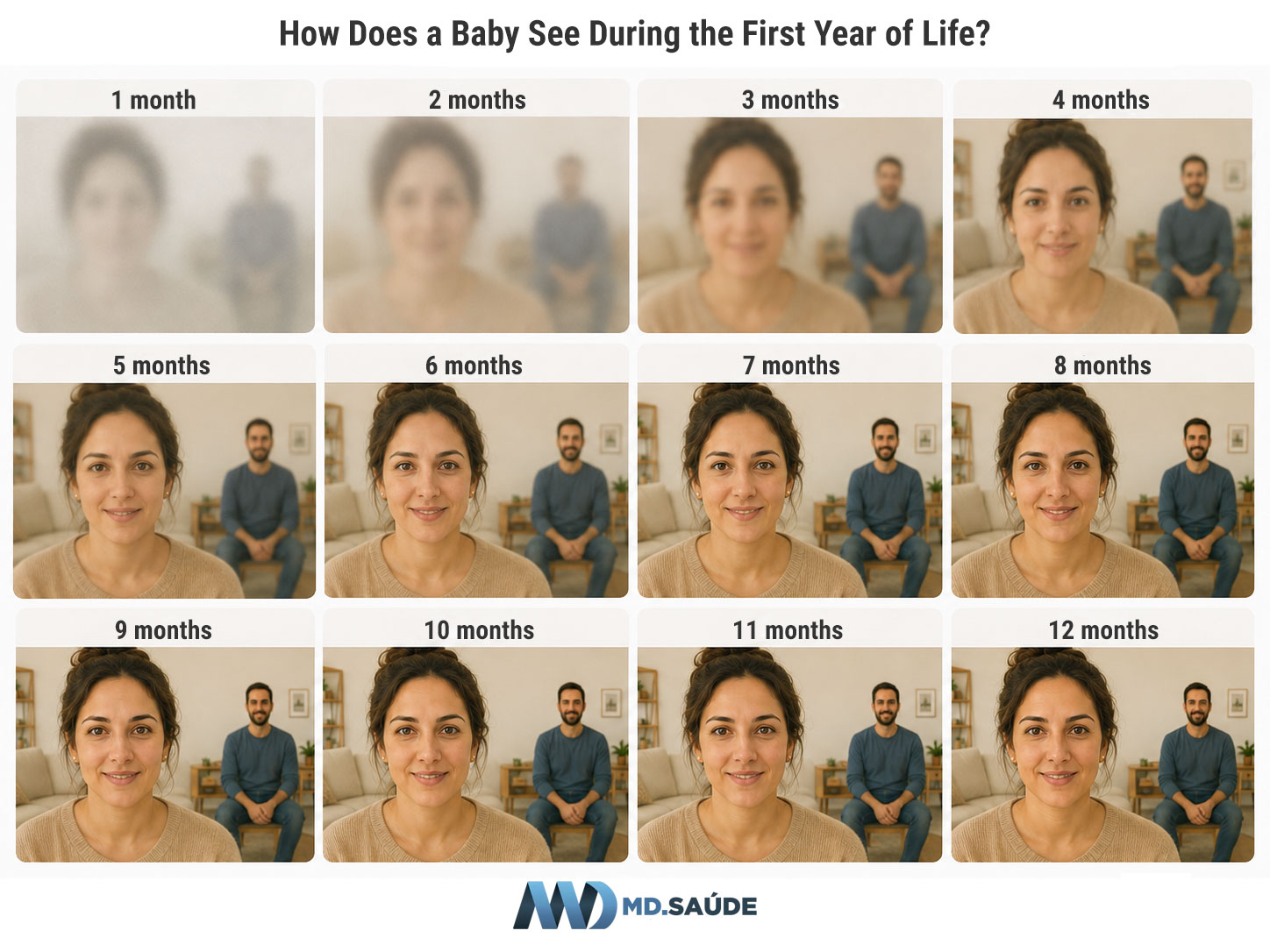
Babies can see from birth, but their vision is blurry and works best at close range, about 8 to 12 inches (20 to 30 cm) away.
During the first few weeks, babies are better able to perceive large shapes, faces, and high-contrast objects. Their ability to distinguish colors is still limited.
At around 2 to 3 months, babies usually become better at focusing on faces and following moving objects with their eyes.
By around 4 months, color perception is much more developed, and babies can distinguish a wide range of colors and shades.
Between 4 and 6 months, depth perception and hand-eye coordination improve, allowing babies to reach for objects more accurately.
During the first few months, babies become increasingly better at visually recognizing their parents and other caregivers, although they also use voices, smells, and other cues to identify them.
Persistent eye misalignment, a white pupil, involuntary eye movements, or difficulty focusing on and following objects are signs that require medical evaluation.
How do babies see?
A baby’s vision is not as sharp as an adult’s. Newborns can already see, but their vision is quite blurry, especially for objects that are farther away.
The human visual system begins to develop during pregnancy. At birth, the main anatomical structures responsible for vision are already present, but they are still functionally immature.
During the first few months of life, babies must learn to focus, move their eyes accurately, and use both eyes together in a coordinated way. They also need to learn how to use the information their eyes send to the brain to understand and interact with the world around them.
A newborn’s vision is initially very blurry. Babies cannot see much fine detail and are better at detecting large shapes, faces, movement, and high-contrast objects. Their ability to distinguish colors is still limited at birth but improves rapidly during the first few months.
The visual system—which includes the eyes, optic nerves, and brain—develops rapidly during the first year of life, but maturation does not end at 12 months. Visual abilities continue to improve during the first several years of childhood.
Knowing the main milestones of a baby’s visual development can help parents make sure their child is seeing properly and allow potential problems to be identified early.
Baby vision during pregnancy
Except in situations where the pregnant woman’s abdomen is exposed to a strong light source, such as on a sunny day at the beach, there is very little light inside the uterus.
Therefore, the baby does not need fully developed vision at this stage of life. There is very little to see.
The fetal eyes begin developing during the first few weeks of pregnancy. As pregnancy progresses, the different structures of the eyes mature, and by the third trimester, the baby can open the eyes and respond to light passing through the abdominal wall.
The fact that babies barely use their eyes before birth does not mean that this period is unimportant for visual development. Diseases and complications that occur during pregnancy can cause permanent changes in vision.
A healthy maternal diet during pregnancy is important to provide the fetus with the nutrients needed for visual development. Appropriate prenatal care also helps identify diseases and infections during pregnancy at an early stage.
Avoiding alcohol, smoking, and unnecessary medications is also important for healthy visual development.
Newborn baby vision
Soon after birth, a newborn’s eyes should be examined, including an assessment of the red reflex.
The test is simple, quick, and painless. It can detect abnormalities that prevent light from passing normally through the eye. An abnormal red reflex can be found in serious conditions such as congenital cataracts and retinoblastoma.
In the United States, red reflex examination is part of the recommended eye assessment during infancy. In the United Kingdom, the NHS Newborn and Infant Physical Examination (NIPE) program includes an eye examination shortly after birth, ideally within 72 hours, and another examination at 6 to 8 weeks. In India, the organization and timing of childhood eye screening can vary between states and healthcare settings, although national child-health programs include screening from birth for congenital and developmental conditions.
Although these eye conditions are uncommon, they need to be detected and treated early to minimize their impact on visual development.
At birth, a baby’s vision is very blurry. The ability to focus is still poorly developed, and color perception is limited.
Newborns see best at a distance of about 8 to 12 inches (20 to 30 cm), which is approximately the distance between the baby’s face and the face of a parent during breastfeeding or bottle-feeding.
Despite these visual limitations, studies show that within the first few days after birth, babies can already distinguish their mother’s face from that of an unfamiliar woman and tend to look at their mother’s face for longer.
At this stage, external facial features appear to play an important role in recognition. In experiments in which the mother and an unfamiliar woman wore scarves that concealed or altered the hairline and outline of the head, the newborns’ preference for their mother’s face disappeared. This suggests that newborns use these external visual features as some of the cues that help them recognize their mother’s face.
In everyday life, however, recognition of the mother does not depend on appearance alone. Babies also use other cues, such as voice, smell, touch, and the way the mother interacts with them.
Baby vision during the first month
At birth, babies have small pupils, which limit the amount of light entering their eyes.
As the weeks pass and the retina and its connections with the brain mature, babies become better at seeing patterns and light-and-dark bands. Large shapes and high-contrast objects begin to attract their attention.
The ability to focus is still best at close range, about 8 to 12 inches (20 to 30 cm) away.
Color perception also develops progressively. During the first few weeks, strong contrasts attract more attention. As the months pass, babies become increasingly able to distinguish different colors and shades.
To stimulate vision while the baby is awake, parents can use toys, books, or cards with simple shapes, bright colors, and strong contrasts, placing them at a distance where the baby can comfortably see them.
At this stage, it is relatively common for the eyes to appear misaligned from time to time. One eye may briefly turn inward or outward and then return to its usual position.
These episodes should become progressively less frequent over the following months. If one eye remains turned, if the misalignment occurs very frequently, or if there is any concern about eye alignment, talk to your pediatrician or an eye doctor.
Baby vision during the second and third months
Vision develops very rapidly during this stage. Babies begin to see more clearly, focus better on faces, follow moving objects with their eyes, and direct their gaze toward different areas without needing to move their entire head.
Occasional eye misalignment also becomes less frequent. In general, the random eye movements or occasional crossing that can occur in newborns should be disappearing by around 2 to 3 months.
At this stage, babies also become more responsive to light. To help establish the difference between day and night, keep the environment naturally bright during the day and reduce lighting at night. There is no need to leave a light on while the baby sleeps for reasons related to visual development.
To stimulate vision, continue showing the baby objects with different colors and shapes. Move them to different positions to encourage the baby to follow them with the eyes. Carry the baby around and talk to them frequently.
When the baby is awake and supervised by an adult, place them on their stomach. The baby will lift the head and neck to look forward. This practice, known as tummy time, provides different visual stimuli and is important for motor development.
Important: babies should be placed on their stomach only when they are awake and supervised. For sleep, babies should be placed on their back because sleeping on the stomach increases the risk of sudden infant death syndrome (SIDS).
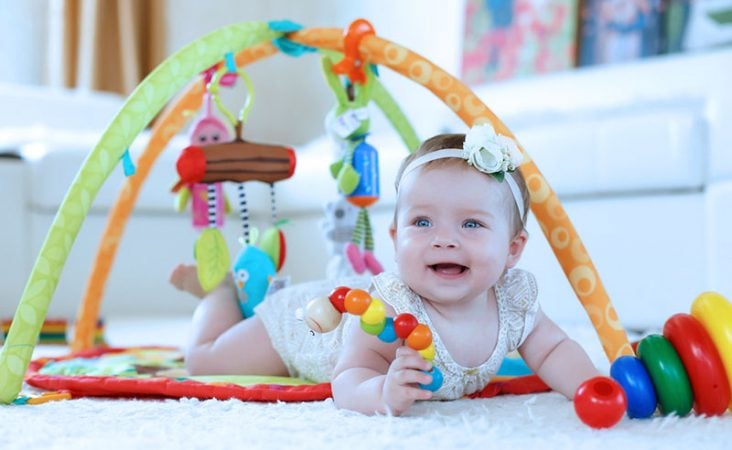
As visual coordination improves, the baby’s eyes begin to work together to focus on and follow a moving object.
By around 3 months of age, babies are generally expected to make eye contact and follow a moving object with their eyes. If this does not occur, talk to your pediatrician.
Baby vision from 4 to 6 months
Between 4 and 6 months, hand-eye coordination improves significantly. Babies become better at using visual information to reach for and grasp what they see.
Depth perception also improves, allowing them to estimate the distance between their hands and objects more accurately.
Color vision is much more developed. By around 4 months, babies can respond to a wide range of colors and shades.
At this age, babies also become increasingly good at recognizing familiar faces, including from greater distances, and begin to notice objects and details that previously did not attract their attention.
By around 6 months, significant development has occurred in the visual centers of the brain, allowing babies to see more detail and move their eyes more quickly and accurately when tracking moving objects.
Vision has improved considerably compared with birth, but it is still not equivalent to adult vision. Visual acuity continues to develop during the first few years of childhood.
Recommendations for routine vision screening vary between countries.
In the United States, age-appropriate eye assessment is recommended during routine pediatric care beginning in infancy. The American Association for Pediatric Ophthalmology and Strabismus recommends assessment of visual behavior, eye movements, pupils, and the red reflex during the first year of life. In the United Kingdom, eye assessment is included in the newborn examination and again during the 6- to 8-week infant examination. In India, national child-health programs provide screening for health and developmental conditions from birth, but the timing and availability of specific eye examinations may vary by region and healthcare setting.
These screening schedules do not mean that parents should wait if there is a suspected problem. Babies with signs of a visual disorder, risk factors, or abnormalities identified by a healthcare professional should be referred for earlier eye evaluation.
Baby vision from 7 to 12 months
At this age, babies become increasingly able to coordinate their eyes and hands. Many begin crawling, and with better depth perception, they can pick up objects more easily and bring them to their mouths.
They are also more prone to minor household accidents, including accidentally hitting their eyes with objects. Parents and caregivers should remain alert.
Eye color also tends to become more stable during the first year of life, although small changes may continue to occur in some children afterward.
By 12 months, many babies are crawling, pulling themselves up on furniture, or trying to walk.
Crawling gives babies opportunities to practice depth perception and coordination between vision and movement. However, some children do very little crawling before they begin walking, which by itself does not indicate a visual or developmental problem.
Avoid allowing babies to spend long periods in front of televisions, smartphones, tablets, or other screens, even when they are watching content described as educational.
At this age, direct interaction with people and objects in the environment is much more important for development than content passively presented on a screen. Babies learn best by playing, moving, exploring their surroundings, listening to other people, and interacting with them.
Video calls with family members are different from passive screen use because they allow real-time social interaction.
As children grow, it is also important to balance activities that require prolonged near focusing with outdoor play and time outside. Spending excessive time on near-vision activities and too little time outdoors is associated with a higher risk of developing myopia (nearsightedness).
Signs of vision problems in babies
Most babies begin life with healthy eyes and develop the expected visual abilities without difficulty.
Occasionally, however, eye diseases or abnormalities in visual development can occur. Parents should watch for the following signs:
- Excessive sensitivity to light: this should be evaluated, especially when accompanied by excessive tearing, redness, or changes in the appearance of the eye.
- Difficulty making eye contact or following objects: by around 3 months, babies can usually fix their gaze and follow a moving object. If this does not occur, an evaluation is needed.
- Constant or very frequent eye misalignment: occasional eye drifting can occur during the first few months, but an eye that remains turned or frequent misalignment beyond the early months should be evaluated.
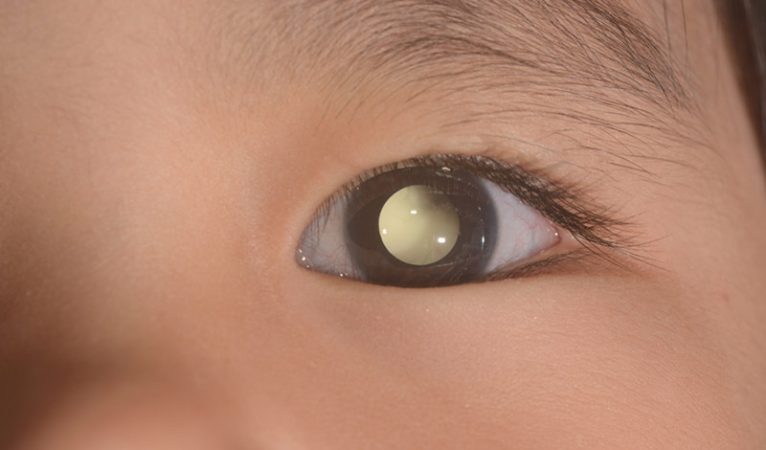
- A white pupil or white reflex in photographs: this sign is called leukocoria and can occur with serious conditions such as congenital cataracts and retinoblastoma. If a white reflex appears repeatedly, especially if it is always in the same eye, the child should be evaluated promptly.
- Nystagmus: involuntary, repetitive eye movements that may occur from side to side, up and down, or in a rotating pattern. Nystagmus in a baby should be evaluated by an ophthalmologist.
- Persistent tearing: this can occur because of a blocked tear duct but may also be associated with other eye conditions.
- Persistent eye discharge or crusting: these may be signs of infection or inflammation.
- Drooping eyelid: an eyelid that covers part of the pupil can interfere with normal visual development.
Other warning signs include persistent eye redness, pain, changes in the size or shape of the pupils, and any significant change in the child’s visual behavior.
Medical advice should also be sought if a baby loses a visual ability that they had previously acquired.
The earlier a condition that could interfere with visual development is identified and treated, the greater the chance of preserving the child’s vision.
Eye diseases in premature babies
Babies born before 37 weeks of pregnancy are considered premature. Premature babies have a higher risk of certain visual problems and, depending on their gestational age, birth weight, and clinical course, may require specific follow-up with an eye specialist.
The main eye disease associated with prematurity is retinopathy of prematurity (ROP).
During normal development, blood vessels in the retina gradually grow toward its outermost regions. When a baby is born very prematurely, this process has not yet been completed.
In retinopathy of prematurity, retinal blood vessels develop abnormally. In severe cases, scar tissue, retinal traction, and retinal detachment can occur, with a risk of severe vision loss or blindness.
The lower the gestational age and birth weight, the greater the risk of ROP tends to be. Clinical instability and abnormal fluctuations in oxygen levels can also contribute to the development of the condition.
For this reason, very premature or very low-birth-weight babies, as well as other newborns considered at high risk by the neonatal care team, should undergo specific screening for retinopathy of prematurity. The exact screening criteria vary somewhat between countries and neonatal programs; India, for example, has dedicated national ROP screening guidance.
ROP screening should not be confused with the red reflex examination. Early detection of ROP requires examination of the retina through dilated pupils by an appropriately trained eye specialist.
In addition to retinopathy of prematurity, children who were born prematurely have a higher risk of strabismus, refractive errors, and other abnormalities of visual development.
Nystagmus—involuntary, repetitive movements of the eyes—also requires ophthalmologic evaluation because it can be associated with a variety of disorders affecting the eyes, visual pathways, or nervous system.
- Infant Vision Development: What Can Babies See? – American Academy of Pediatrics.
- Warning Signs of Vision Problems in Infants & Children – American Academy of Pediatrics.
- Kids & Screen Time: The 5 C’s Questions to Ask for Infants – American Academy of Pediatrics.
- Vision Screening Recommendations – American Association for Pediatric Ophthalmology and Strabismus.
- Vision Screening for Infants and Children – American Academy of Ophthalmology.
- Newborn and Infant Physical Examination (NIPE) Screening Programme Handbook – UK National Health Service / GOV.UK.
- Rashtriya Bal Swasthya Karyakram (RBSK 2.0) – National Health Mission, Government of India.
- ROP Screening: Indications & Arrangements – National Health Mission, Government of India.











Reader questions about this topic
Questions selected by the editor for their relevance to this article.