

Summary
Key Points About Labyrinthitis
- What is labyrinthitis? It is an inflammation of the labyrinth, a structure located in the inner ear that is responsible for functions related to balance and hearing.
- What are the symptoms? The main symptoms are severe vertigo, nausea, vomiting, balance problems, hearing loss, and tinnitus (ringing in the ears).
- What causes labyrinthitis? The inflammation may be associated with viral or bacterial infections. In some cases, the exact cause cannot be identified.
- What is the treatment? Treatment depends on the cause and severity. It may include medications to control vertigo and vomiting, treatment of the underlying infection when necessary, and vestibular rehabilitation. Sudden hearing loss requires urgent medical assessment.
- Can labyrinthitis be cured? Many patients experience a gradual recovery of their balance over days or weeks. However, some forms of labyrinthitis can cause permanent hearing loss.
- How long does an episode last? Vertigo is usually most severe during the first few days, but complete recovery of balance may take weeks or, occasionally, months.
What Is Labyrinthitis?
Labyrinthitis is a disease of the inner ear that causes severe vertigo and may affect hearing.
Vertigo is a type of dizziness characterized by a spinning sensation, in which we feel as though either we or our surroundings are rotating.
Although labyrinthitis is generally a benign condition, with most patients making a full recovery, symptoms such as dizziness, nausea, vomiting, and balance problems can be quite disabling during an acute episode.
Labyrinthitis is caused by inflammation of the inner ear, where a structure called the labyrinth is located. The labyrinth is responsible for our sense of balance and hearing.
Although many people use the word labyrinthitis to describe any type of dizziness, this is not medically accurate.
Labyrinthitis is a specific disease of the inner ear, and not all dizziness is caused by inflammation of the labyrinth. In fact, several conditions commonly referred to as labyrinthitis are actually other vestibular disorders, such as benign paroxysmal positional vertigo (BPPV), Ménière’s disease, and vestibular neuritis.
This distinction is important because these conditions may cause similar symptoms but have different causes, treatments, and prognoses.
In this article, we will focus specifically on labyrinthitis, including its causes, clinical manifestations, diagnosis, and treatment.
The Labyrinth and Inner Ear
To understand labyrinthitis, we first need to know what the labyrinth is and how the inner ear works.
The labyrinth is the structure responsible for both hearing and balance. For simplicity, it can be divided into two main parts:
- Cochlea: a small, snail-shaped structure that converts sound vibrations into nerve impulses that travel to the brain.
- Vestibular system: consists of three semicircular canals, which detect rotational movements of the head, and the vestibule, which contains two structures called the utricle and saccule. These structures help detect the position of the head relative to gravity and linear movements.
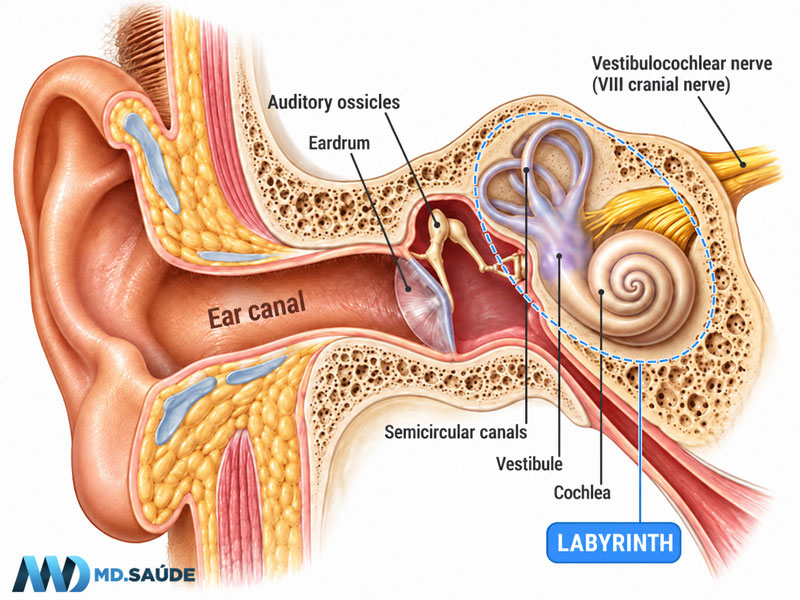
The labyrinth contains fluids that move as we change the position of our head. These movements stimulate specialized sensory cells that send information to the brain about the direction and speed of our movements.
The semicircular canals primarily detect rotational movements of the head, while the utricle and saccule help us perceive linear acceleration and the position of the head relative to gravity.
Information collected by the labyrinth is transmitted to the brain through the vestibulocochlear nerve, also known as the eighth cranial nerve or simply the auditory nerve.
The vestibulocochlear nerve has two branches, each responsible for one of the ear’s basic functions. The cochlear branch sends information about sounds detected by the ear to the brain, while the vestibular branch transmits information about head movements and position detected by the vestibular apparatus.
The brain uses this information together with signals from the eyes, muscles, and joints to maintain balance and spatial orientation.
Do you know why we feel dizzy after spinning around several times? When we stop spinning, even though our body is no longer moving, the fluids inside the semicircular canals continue moving for a few moments. This causes the brain to interpret the signals as though we are still rotating. If we close our eyes, the dizziness tends to become worse because we no longer receive visual information confirming that we are standing still.
In labyrinthitis, inflammation interferes with the normal functioning of the inner ear structures. As a result, the signals sent to the brain become unbalanced compared with those received from the other ear and the other sensory systems, producing a sensation of movement even when the body is motionless.
When the inflammation also affects the cochlea, hearing loss and tinnitus may occur.
What Are the Symptoms of Labyrinthitis?
The most characteristic symptoms of labyrinthitis are:
- Vertigo: the sensation that either we or our surroundings are spinning.
- Nausea and vomiting.
- Loss of balance and difficulty walking.
- Hearing loss, usually in the affected ear.
- Tinnitus (ringing in the ears).
- Nystagmus: involuntary, repetitive eye movements that may be observed during a physical examination.
Vertigo usually begins suddenly and can be so severe that patients are unable to carry out their usual activities. Not every patient experiences all these symptoms, and their severity varies depending on the cause and extent of inner ear involvement.
Vertigo and Balance Problems
Vertigo usually develops abruptly and can be extremely intense during the first few hours.
Patients feel as though their surroundings are spinning or their own body is moving, even while lying down or sitting still.
Symptoms may be so severe that patients prefer to remain lying down because any head movement makes them feel worse.
However, this does not mean that movement causes the vertigo. In labyrinthitis, vertigo is generally already present at rest and becomes worse when the person tries to move.
Unlike benign paroxysmal positional vertigo (BPPV), which causes brief episodes of dizziness triggered by head movements, vertigo associated with acute labyrinthitis is usually continuous during the first few days. However, its intensity may fluctuate, with periods of improvement and worsening.
Difficulty maintaining balance is also common. Patients may feel unsteady when standing, have difficulty walking, or experience a sensation of being pulled to one side.
Nausea and Vomiting
Nausea and vomiting are common during the acute phase.
This occurs because the vestibular system is connected to regions of the nervous system responsible for controlling nausea and vomiting.
During more severe episodes, patients may vomit repeatedly and have difficulty drinking water or eating.
Persistent vomiting increases the risk of dehydration, sometimes making it necessary to administer fluids and medications intravenously.
Hearing Loss
Hearing loss is one of the most important manifestations of labyrinthitis because it suggests involvement of the cochlea, the structure responsible for hearing.
It may develop suddenly, usually affecting only one ear, and its severity can vary.
Some patients simply notice that sounds seem muffled or that one ear feels blocked. Others experience severe hearing loss, which may be profound enough to cause complete deafness in the affected ear.
This type of hearing loss is called sensorineural hearing loss. It occurs because of damage to the structures responsible for detecting or transmitting auditory signals, rather than simply because of an obstruction in the ear canal.
Sudden hearing loss should be considered an ENT emergency, even when accompanied by vertigo and apparently occurring as part of an episode of labyrinthitis.
This is because sudden hearing loss can have other causes, some of which require early treatment to improve the chances of recovery.
Tinnitus (Ringing in the Ears)
Tinnitus is the perception of sound when no external source is producing it.
It may be described as buzzing, ringing, hissing, whistling, or another type of noise, usually perceived in the affected ear.
In labyrinthitis, tinnitus is generally associated with damage to the hearing structures of the inner ear.
It may disappear as the inflammation improves, but it can also persist, particularly when some degree of hearing loss remains.
Read also: Tinnitus (Ear Ringing): Causes, Types, and Treatment.
Nystagmus
Nystagmus is an involuntary, rhythmic, repetitive movement of the eyes that may be observed during the physical examination of patients with acute vestibular disorders.
In labyrinthitis, this movement usually has a horizontal component, although its characteristics may vary depending on the affected structure.
Nystagmus occurs because signals from the two vestibular systems become unbalanced, disrupting the reflexes responsible for keeping the eyes stable during head movements.
Its presence may help doctors establish a diagnosis, but nystagmus is not exclusive to labyrinthitis. Certain patterns may also occur in neurological diseases, including stroke.
What Is an Episode of Labyrinthitis Like?
An episode of labyrinthitis usually begins suddenly, with severe vertigo, nausea, vomiting, and difficulty maintaining balance.
In many cases, symptoms appear even without the patient making any particular movement.
Vertigo may remain severe for several hours or days and is aggravated by head movements and attempts to walk.
The first two or three days are usually particularly difficult in uncomplicated acute inflammatory cases. After that, patients generally begin to improve gradually.
Even after the intense spinning sensation disappears, patients may continue to experience instability, discomfort when moving their head quickly, and difficulty walking in certain environments.
The course of hearing problems varies. Some patients experience an improvement in hearing during recovery, while others may be left with lasting damage.
It is important to emphasize that episodes of vertigo lasting only a few seconds, occurring several times a day, and triggered exclusively by turning the head are not typical of acute labyrinthitis.
In such cases, other conditions, such as benign paroxysmal positional vertigo, should be considered.
What Causes Labyrinthitis?
Labyrinthitis can develop through different mechanisms, mainly involving infections and inflammation.
The most important causes are viral infections and complications of bacterial infections affecting the middle ear or the meninges.
The severity, treatment, and chances of recovery depend on the cause of the inflammation and the extent of the damage to the inner ear.
Viral Labyrinthitis
Inflammation of the labyrinth is most often associated with a viral infection. In many cases, patients report having had a recent viral illness, particularly a respiratory infection such as the flu or a common cold. Inflammation of the labyrinth may occur during or after a viral infection.
Viruses associated with labyrinthitis or other forms of inner ear involvement include:
- Influenza virus (causes the flu).
- Parainfluenza virus (causes common cold symptoms).
- Adenovirus (causes common cold symptoms and viral gastroenteritis).
- Respiratory syncytial virus (RSV, causes common cold symptoms).
- Cytomegalovirus.
- Mumps virus, which belongs to the paramyxovirus family.
- Varicella-zoster virus (causes chickenpox and shingles).
- Rubella virus.
- Herpes simplex virus type 1 (causes cold sores).
- Coxsackievirus (causes hand, foot, and mouth disease).
Inflammation may result from the virus acting directly on the structures of the inner ear or from inflammatory mechanisms triggered by the infection.
This does not mean that these infections commonly cause labyrinthitis. In most people, they do not affect vestibular function or hearing.
One particular situation involves infection with the varicella-zoster virus, which causes chickenpox and shingles.
When this virus affects nerve structures near the ear, it can cause Ramsay Hunt syndrome, which is mainly characterized by peripheral facial paralysis and blister-like lesions on the outer ear or inside the ear canal. Some patients also experience vertigo, tinnitus, and hearing loss due to vestibulocochlear involvement.
Bacterial Labyrinthitis
Bacterial labyrinthitis is less common but is usually a more serious condition.
It generally develops as a complication of a bacterial infection near the inner ear, particularly otitis media (middle ear infection) or bacterial meningitis.
In otitis media, the infection initially affects the middle ear, the region located behind the eardrum. In complicated cases, the inflammation may spread to the inner ear, where the labyrinth is located.
The labyrinth may be affected by toxins and inflammatory substances produced during the infection or by bacteria directly invading the inner ear structures.
When bacteria actually invade the inner ear and cause purulent inflammation, the condition is called suppurative labyrinthitis.
Suppurative labyrinthitis is particularly concerning because it can destroy sensory cells in the labyrinth, causing severe or permanent hearing loss as well as persistent balance problems.
Bacteria associated with these complications include Streptococcus pneumoniae, Haemophilus influenzae, and other microorganisms responsible for middle ear infections and meningitis.
In patients with chronic otitis media, especially when a cholesteatoma is present, the infection may also spread to the labyrinth and cause serious complications.
Patients who develop severe vertigo accompanied by fever, significant ear pain, ear discharge, or hearing loss need prompt medical evaluation, particularly if they already have a diagnosed ear infection.
Other Causes of Inner Ear Inflammation
Although infections are the best-known causes, there are less common situations in which the labyrinth is affected through other mechanisms.
Autoimmune diseases, for example, can cause inner ear inflammation and hearing loss, sometimes accompanied by vestibular symptoms.
Trauma, especially injuries that cause fractures of the temporal bone, can also damage the labyrinth and predispose patients to inflammatory or infectious complications.
These conditions are less common and usually require specialist assessment.
Can Stress, Anxiety, and Coffee Cause Labyrinthitis?
There is no consistent evidence that stress, anxiety, fatigue, or coffee consumption directly causes inflammation of the labyrinth.
These factors may increase the perception of dizziness, worsen discomfort, or contribute to vestibular symptoms in people with other conditions, but this does not mean they cause true labyrinthitis.
Therefore, it is incorrect to assume that everyone who experiences vertigo after a stressful period has developed labyrinthitis.
The same applies to high blood pressure, diabetes, smoking, and alcohol consumption. These factors may affect vascular health, increase susceptibility to infections, or cause symptoms through other mechanisms, but they are not direct causes of inflammation of the labyrinth.
When Can Labyrinthitis Be Dangerous?
Although many inflammatory vestibular conditions have a favorable outcome, not all cases of severe vertigo originate in the inner ear.
One of the main diagnostic challenges is distinguishing a peripheral vestibular disorder from potentially serious neurological conditions, particularly a stroke affecting the cerebellum or brainstem.
Some strokes can cause severe vertigo, nausea, and balance problems without initially producing typical stroke symptoms, such as paralysis on one side of the body or obvious speech difficulties.
Furthermore, a stroke affecting the blood supply to the inner ear can also cause sudden hearing loss.
Therefore, vertigo accompanied by hearing loss does not rule out a vascular cause.
Emergency medical care is required when vertigo begins suddenly and is accompanied by warning signs such as severe difficulty standing or walking without support, double vision, speech difficulties, difficulty swallowing, weakness, numbness, disorientation, or a sudden, extremely severe headache.
Sudden hearing loss, even without other neurological symptoms, also requires urgent assessment.
In patients with suspected bacterial labyrinthitis, particularly those with fever, severe ear pain, ear discharge, neck stiffness, or altered consciousness, medical attention should not be delayed.
How Is Labyrinthitis Diagnosed?
The diagnosis of labyrinthitis is based primarily on the patient’s medical history, the characteristics of the symptoms, and the physical examination.
The doctor will try to determine when the vertigo began, how long it lasts, whether it is continuous or occurs only with certain movements, whether hearing loss is present, and whether the patient has recently had an infection.
Symptoms such as tinnitus and reduced hearing help identify possible cochlear involvement.
The physical examination includes assessing the ears, eye movements, balance, and motor coordination.
A neurological examination is also important to identify signs that may indicate a disorder of the central nervous system.
Balance Examination and Head Impulse Test
One of the tests a doctor may use is the head impulse test.
This test evaluates the vestibulo-ocular reflex, which keeps our eyes focused on a fixed point while the head moves.
The test is performed with the patient looking at a fixed target in front of them. The doctor quickly turns the patient’s head to one side and observes whether the eyes remain focused on the target.
When vestibular function is impaired on one side, the eyes may temporarily lose fixation on the target during the head movement. A small, rapid, involuntary corrective eye movement, called a corrective saccade, is then needed to return the gaze to the target.
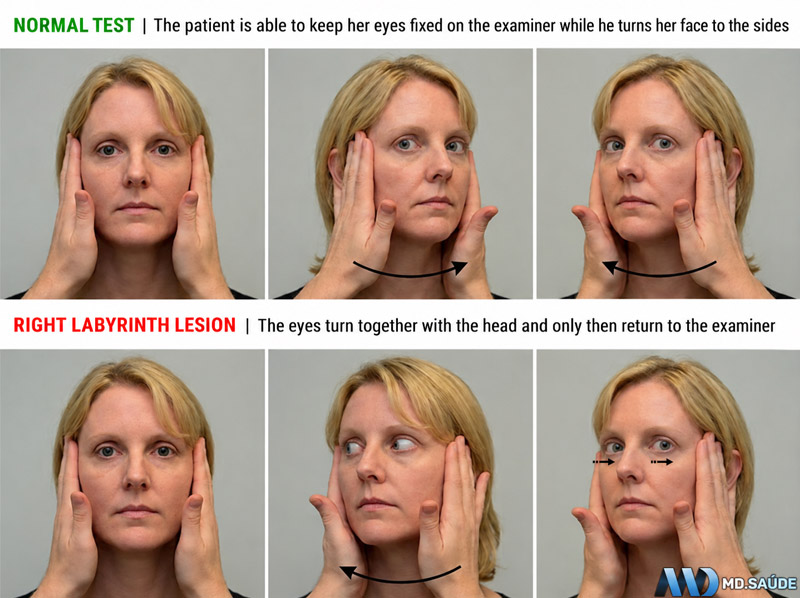
An abnormal result may indicate peripheral vestibular dysfunction, but it does not confirm labyrinthitis on its own and does not rule out every neurological cause of vertigo.
The test must be interpreted together with the other clinical findings.
Audiometry
Audiometry is one of the most important tests when labyrinthitis is suspected and hearing loss is present.
It helps identify which ear is affected, assess the severity of hearing loss, and determine whether the findings are consistent with inner ear damage.
In addition to helping establish the diagnosis, the test provides a baseline for monitoring hearing recovery during treatment.
When hearing loss develops suddenly, the assessment should be performed urgently.
Imaging Tests
Imaging tests are not necessary for every patient with suspected labyrinthitis.
Magnetic resonance imaging (MRI) may be indicated when the cause of vertigo is uncertain, a stroke is suspected, neurological symptoms are present, hearing loss has an unclear cause, or other diseases need to be investigated.
In cases of suspected bacterial labyrinthitis associated with otitis media or mastoiditis*, a CT scan of the temporal bones may help identify complications of the infection.
*Mastoiditis is an infection of the bone located behind the ear, usually caused by the spread of a middle ear infection. In severe cases, the infection may reach the inner ear and cause bacterial labyrinthitis.
Specialized vestibular tests, such as videonystagmography and the video head impulse test, may also be used in selected cases.
The choice of tests depends on each patient’s clinical presentation. There is no single test capable of confirming every case of labyrinthitis.
What Is the Treatment for Labyrinthitis?
The treatment of labyrinthitis depends on its cause, the severity of the symptoms, and whether hearing loss is present.
In uncomplicated viral or inflammatory cases, treatment is usually symptomatic, involving medications to control vertigo, nausea, and vomiting during the acute phase, along with measures to promote the recovery of balance.
When a bacterial infection is suspected, antibiotic treatment must be started promptly because the risk of complications and long-term damage is higher.
Sudden hearing loss may also require specific treatment, even when the other symptoms are consistent with vestibular inflammation.
What Is the Best Medication for Labyrinthitis?
There is no single medication that is the best treatment for every case of labyrinthitis.
During the acute phase, medications may be used to reduce vertigo and control nausea and vomiting.
Medications commonly used include:
- Antihistamines with vestibular suppressant effects, such as dimenhydrinate, which can reduce vertigo and nausea.
- Antiemetics, such as metoclopramide and ondansetron, which help control nausea and vomiting.
- Benzodiazepines, such as diazepam or lorazepam, which may reduce vestibular symptoms but are generally avoided as a first choice because of the risk of drowsiness, falls, and other adverse effects.
These medications do not necessarily eliminate inflammation of the labyrinth. Their primary purpose is to provide relief during the period when symptoms are most severe.
Vestibular suppressants should be used for the shortest time necessary, generally during the first 24 to 72 hours, depending on symptom severity.
This is because prolonged use may interfere with the brain’s adaptation to vestibular dysfunction and delay the recovery of balance.
Patients with persistent vomiting or an inability to drink fluids may require hospital treatment to control symptoms and correct dehydration.
Does Betahistine (Betaserc) Work for Labyrinthitis?
Betahistine is a medication frequently prescribed to patients with vertigo and is marketed under brand names such as Betaserc and, in Brazil, Labirin.
However, its effectiveness depends on the condition being treated, and there is no strong clinical evidence that betahistine speeds up recovery from true labyrinthitis or restores hearing function damaged by inflammation.
Studies evaluating betahistine in patients with different causes of vertigo have produced inconsistent results, and the available evidence is generally of low quality.
Therefore, betahistine should not be considered a specific treatment for eliminating inflammation of the labyrinth.
Its prescription should take into account the diagnosis and the goals of treatment.
Corticosteroids
Corticosteroids are medications with powerful anti-inflammatory effects and may be used in certain diseases affecting the inner ear.
However, their role in treating labyrinthitis depends on the clinical presentation.
In patients with vestibular neuritis, more recent studies have not demonstrated a consistent clinical benefit of corticosteroids in restoring balance, although some specialists still consider early treatment.
The situation is different in labyrinthitis accompanied by sudden sensorineural hearing loss.
In these cases, an ENT specialist may consider early treatment with corticosteroids, either orally or through an intratympanic injection, depending on the suspected cause, the severity of hearing loss, and the timing of the diagnosis.
The goal is to reduce hearing impairment and improve the chances of recovery, although successful results are not guaranteed.
For this reason, it is inappropriate to recommend corticosteroids indiscriminately to every patient with vertigo or to claim that they have been proven to speed up recovery from all forms of labyrinthitis.
Treatment of Bacterial Labyrinthitis
Bacterial labyrinthitis is a potentially serious complication that requires hospital treatment.
Treatment primarily involves intravenous antibiotics, selected according to the underlying infection, the most likely microorganisms, and the results of microbiological tests.
Antibiotics such as ceftriaxone, cefotaxime, and vancomycin may be used in certain situations, but the regimen depends on the source of the infection, its severity, and bacterial resistance patterns.
In cases associated with complicated otitis media, drainage of the middle ear may be necessary through a procedure called myringotomy.
When mastoiditis or another associated complication is present, more extensive surgery may be required to control the infection.
Early treatment is essential to reduce the risk of serious complications, but it cannot always prevent permanent hearing damage.
Are Antiviral Medications Necessary?
Most cases of labyrinthitis considered to be viral do not require antiviral treatment.
There is no evidence that medications such as acyclovir or valacyclovir should be routinely prescribed to all patients with acute vertigo attributed to a viral infection.
However, there are specific situations in which antiviral treatment may be indicated, such as certain cases of varicella-zoster virus infection, particularly Ramsay Hunt syndrome.
In these situations, treatment depends on the identified infection and should be prescribed by a doctor.
Vestibular Rehabilitation
Vestibular rehabilitation is an important part of treatment for patients who continue to experience dizziness or balance problems after the acute phase of labyrinthitis.
When the labyrinth is damaged, the brain begins receiving information that differs from what it previously received.
Over time, the nervous system can adapt to this change by making better use of signals from the healthy ear, vision, muscles, and joints.
This process is called vestibular compensation.
Vestibular rehabilitation uses specific exercises to stimulate this adaptation and improve gaze stability, balance, and the ability to move without discomfort.
Treatment may include head movement exercises, visual fixation exercises, balance training in different positions, and walking exercises involving progressively more challenging changes in direction.
Exercises should be individualized, preferably under the guidance of a physiotherapist or physical therapist specializing in vestibular rehabilitation.
Rehabilitation does not directly eliminate inflammation, but it can significantly improve functional recovery when vestibular dysfunction persists.
What Should You Do During an Episode of Labyrinthitis?
During the most severe phase of vertigo, certain measures may help reduce discomfort and prevent complications.
Rest may be necessary during the first few hours, particularly when nausea or vomiting is severe.
Patients should find a comfortable position, avoid sudden movements, and maintain adequate hydration.
If vomiting occurs, drinking small amounts of fluid several times throughout the day may be easier.
It is also important to avoid walking without assistance when balance is severely impaired, particularly in older adults or people at risk of falling.
Patients should not drive, climb to elevated places, or operate machinery while experiencing vertigo or balance problems.
However, as the acute symptoms begin to improve, patients should gradually resume movement and their usual activities, within the limits of safety and tolerance.
Remaining completely inactive for many days may interfere with vestibular compensation and delay recovery.
How Long Does Labyrinthitis Last?
The duration of labyrinthitis varies depending on the cause and severity of the inflammation.
In uncomplicated viral or inflammatory cases, severe vertigo usually begins to subside after the first few days, although patients may continue to experience instability and discomfort when moving.
In many cases, balance gradually improves over two to six weeks.
However, some patients continue to experience residual dizziness or balance problems for several months, especially when vestibular function remains impaired.
Hearing recovery does not necessarily follow the same course as balance recovery.
Some patients experience partial or complete improvement in hearing, while others are left with hearing loss or tinnitus.
In cases of severe bacterial labyrinthitis, recovery may take longer, and the risk of permanent damage is higher.
If symptoms do not gradually improve, worsen after an initial period of improvement, or repeatedly return, it is important to reassess the diagnosis.
Can Labyrinthitis Be Cured?
Yes. Many cases of labyrinthitis have a favorable outcome, particularly when the inflammation does not cause permanent damage to the hearing and balance structures of the inner ear.
In uncomplicated cases, vertigo usually disappears gradually, and patients may return to their usual activities over the following weeks.
However, recovery does not depend solely on the inflammation resolving.
The brain also needs to adapt to changes in the vestibular system, a process that may continue for weeks or months.
The likelihood of permanent complications depends on the severity and cause of the inner ear damage.
The main possible long-term complications are permanent hearing loss, persistent tinnitus, and chronic balance problems.
Suppurative bacterial labyrinthitis carries a particularly high risk of permanent damage.
Patients with significant hearing loss may need specialist follow-up and assessment for hearing rehabilitation options, such as hearing aids or cochlear implants in selected cases.
Frequently Asked Questions About Labyrinthitis
Can Labyrinthitis Come Back Repeatedly?
A new episode of inflammation of the labyrinth can occur, but repeated episodes of vertigo should not automatically be attributed to recurrent labyrinthitis.
When someone experiences several episodes over months or years, especially if they are brief or associated with particular head movements, other vestibular disorders need to be investigated.
These include Ménière’s disease, vestibular migraine, and benign paroxysmal positional vertigo.
Therefore, patients with recurrent episodes should seek medical assessment to confirm the underlying cause.
Is Emotional Labyrinthitis a Real Condition?
The term emotional labyrinthitis is sometimes used informally to describe dizziness associated with stress, anxiety, or emotionally difficult situations.
However, it is not a recognized medical diagnosis.
Stress and anxiety can cause dizziness or worsen existing vestibular symptoms, but there is no evidence that they directly cause inflammation of the labyrinth.
Therefore, when dizziness occurs during periods of anxiety, the most important step is to identify the actual cause of the symptoms rather than assuming that the person has emotional labyrinthitis.
Are There Any Home Remedies or Herbal Teas for Labyrinthitis?
There is no consistent scientific evidence that herbal teas, juices, or other home remedies can cure inflammation of the labyrinth.
Simple measures, such as staying well hydrated, resting during the most severe phase of vertigo, and avoiding alcoholic beverages, may help reduce discomfort.
However, these measures are not a substitute for medical assessment, particularly when sudden hearing loss or a bacterial infection is suspected.
How Can You Get Rid of Labyrinthitis Quickly?
There is no method that can immediately stop inflammation of the labyrinth and guarantee complete recovery within a few hours.
Medications used during the acute phase primarily help control vertigo, nausea, and vomiting.
Recovery usually occurs gradually as the inflammation subsides and the brain adapts to changes in vestibular function.
Vestibular rehabilitation may speed up functional recovery in patients with persistent balance problems.
In bacterial cases, prompt treatment is essential to prevent complications.
Can You Drink Coffee if You Have Labyrinthitis?
There is no universal recommendation to eliminate coffee from the diet of everyone who has had labyrinthitis.
Caffeine is not a proven cause of inflammation of the labyrinth, and restricting caffeine intake has not been shown to speed up recovery.
However, some people notice worsening nausea, palpitations, anxiety, or discomfort after consuming large amounts of caffeine.
In these cases, reducing caffeine intake may help control symptoms.
Can Labyrinthitis Cause Headaches?
Headaches are not among the most characteristic symptoms of labyrinthitis.
Some patients may experience headaches during an episode of vertigo, but a severe headache, one that differs from the usual pattern, or one with a sudden onset requires particular attention.
In these situations, other causes should be considered, including vestibular migraine and neurological diseases.
A sudden, extremely severe headache accompanied by vertigo should be evaluated in an emergency department.
Can Labyrinthitis Cause Ear Pain?
Ear pain is not a typical symptom of isolated viral labyrinthitis.
However, it may occur when inflammation of the labyrinth is associated with a middle ear infection, such as otitis media.
Patients with vertigo, significant ear pain, fever, or discharge from the ear canal need medical assessment to rule out a complicated bacterial infection.
Can Sinusitis Cause Labyrinthitis?
Common sinusitis is not a usual cause of labyrinthitis.
Although respiratory infections may occur alongside ear problems, it is incorrect to assume that sinusitis directly causes inflammation of the labyrinth in most patients.
When dizziness and nasal symptoms occur simultaneously, it is important to determine whether they are genuinely related or are manifestations of different conditions.
Can Labyrinthitis Cause High Blood Pressure?
Labyrinthitis is not a common cause of high blood pressure.
During a severe episode, pain, fear, nausea, and physical stress may cause a temporary increase in blood pressure.
However, persistently elevated blood pressure requires a separate medical assessment and should not automatically be attributed to labyrinthitis.
Similarly, someone with hypertension who suddenly develops vertigo should not assume that they are experiencing an episode of labyrinthitis, particularly if they have risk factors for stroke.
- Labyrinthitis and vestibular neuritis — BMJ Best Practice. Revisão de 2026.
- Purulent Labyrinthitis — Merck Manual Professional Edition. Atualização de 2026.
- Vestibular Neuronitis — Merck Manual Professional Edition.
- Furman JM. Vestibular neuritis (acute unilateral vestibulopathy). UpToDate. Revisão bibliográfica até setembro de 2026.
- Acute Unilateral Vestibulopathy/Vestibular Neuritis: Diagnostic Criteria — Bárány Society, 2022.
- GRACE-3: Acute Dizziness and Vertigo in the Emergency Department — Academic Emergency Medicine, 2023.
- Clinical Practice Guideline: Sudden Hearing Loss (Update) — American Academy of Otolaryngology–Head and Neck Surgery, 2019.
- Vestibular Rehabilitation for Peripheral Vestibular Hypofunction — Journal of Neurologic Physical Therapy, 2022.
- Acute Unilateral Vestibulopathy and Corticosteroid Treatment: A Randomized Placebo-Controlled Double-Blind Trial — Journal of Vestibular Research, 2025.
- Betahistine for Symptoms of Vertigo — Cochrane Database of Systematic Reviews, 2016.






Reader questions about this topic
Questions selected by the editor for their relevance to this article.